

Where to Find Trustworthy Ayurveda Ebooks Right Now
For classical texts, the Central Council for Research in Ayurvedic Sciences (CCRAS) hosts free downloadable PDFs including the Charaka Samhita, while The Ayurvedic Institute curates reading lists for structured study, and Ebook-warehouse offers instant-download wellness and cooking titles for readers who want practical guides without the hunt. Here’s what to do first:
- Download a classical text free. Grab a public-domain PDF of the Charaka Samhita from a government or academic archive.
- Browse a reading list. Check Ayurveda.com’s beginner-to-advanced path for vetted title recommendations.
- Shop curated modern titles. Look through Ebook-warehouse’s wellness and cooking collections for instant PDF downloads.
Stick to PDF or EPUB files. They’re the two formats you’ll see most often, and both open on nearly any phone, tablet, or e-reader.
Key Takeaways
A staged approach, starting with free public-domain classical texts and practical modern guides before moving to annotated editions, gives self-study readers the fastest path to real results.
| Point | Details |
|---|---|
| Start with three source types | Combine government repositories like CCRAS, institute reading lists, and curated retailers for full coverage. |
| Match books to your level | Begin with lifestyle and cooking guides before intermediate clinical texts and classical Sanskrit works. |
| Check edition quality first | Favor named translators, academic publishers, and annotated commentary over unattributed scans. |
| Pick the right file format | Use PDF for scanned classics, EPUB for reflowable modern titles, and confirm DRM-free access. |
| Shop practical titles at Ebook-warehouse | Ebook-warehouse offers instant-download wellness and cooking ebooks suited to the beginner stage of self-study. |
Table of Contents
- Trusted Places to Download or Buy Ayurveda Ebooks
- Best Ayurveda Books by Reading Level, From Beginner to Classical
- How to Judge an Edition Before You Trust It
- Which File Format Should You Choose: PDF, EPUB, or Kindle?
- A Study Path for Learning Ayurveda From Ebooks
- Is It Legal to Download Ayurveda Ebooks for Free?
- What I’ve Noticed About Self-Study With Ebooks
- Building Your Ayurveda Ebook Library With Ebook Warehouse
- Frequently Asked Questions
- Sources
Trusted Places to Download or Buy Ayurveda Ebooks
Three source types cover almost everything a self-study reader needs, and mixing them is smarter than relying on just one. Government and academic repositories hold the free, public-domain material. Specialist institutes offer curated guidance so you’re not guessing. Retailers fill in the modern, practical titles you’ll actually use daily.
- Government and academic repositories. CCRAS’s e-books page is the most reliable free source for classical and research-grade Ayurvedic texts, no account or payment required.
- Specialist institutes. The Ayurvedic Institute, founded on Vasant Lad’s teaching, publishes a stepwise reading path that tells you which books to read first and why.
- Free practical collections. Saumya Ayurveda’s eBook set covers dosha balancing and digestion basics, good entry points before anything technical.
- Curated retailers. Ebook-warehouse stocks wellness, cooking, and lifestyle titles as instant PDF downloads. This matters when you want a book today instead of waiting on a shipment or hunting through a scanned archive.
Combining a repository, an institute list, and a retailer gives you both the free classical foundation and the polished, readable modern material, a pairing that reflects how the wider resource landscape is actually structured.
Best Ayurveda Books by Reading Level, From Beginner to Classical
Jumping straight into a 2,000-year-old Sanskrit treatise is the fastest way to quit after one chapter. A staged approach works better, and it’s the same logic Ayurveda recommends: start practical, build toward clinical concepts, then tackle the classics once the vocabulary makes sense.
Beginner tier (lifestyle, cooking, and dosha basics):
- A tri-doshic cookbook or reset guide, such as The Ayurvedic Reset Diet, which pairs recipes with a structured program over several weeks.
- Free practical guides like the Saumya Ayurveda collection, useful for testing dosha concepts without spending anything.
- An introductory book by Vasant Lad or a similar accessible author, since technical Sanskrit texts without this foundation tend to confuse new readers.
- A cookbook adapted for Western kitchens, since ingredient substitutions matter if you’re not near an Indian grocery.
Intermediate tier (clinical concepts and formulas):
- Ayurvedic Medicine by Sebastian Pole, whose second edition adds herb safety updates and more than 100 expanded plant profiles, useful once you’re ready to look at dosing and formulation.
- Clinical overview textbooks covering pulse diagnosis and treatment frameworks, for readers moving past lifestyle tips toward assessment skills.
Classical tier (primary texts):
- Charaka Samhita, the foundational internal-medicine text. An annotated handbook edition with editor notes makes the sutras far more approachable than a raw translation.
- Sushruta Samhita, the classical surgical text, best read in a commentary edition rather than a bare translation.
- Ashtanga Hridayam, a compiled summary text useful once you’ve built vocabulary from the other two.
How to Judge an Edition Before You Trust It
Not every Ayurveda ebook on the market deserves your attention, and classical texts especially vary wildly in quality between translations. Run a quick check before downloading or buying:
- Named translator or editor. Anonymous translations of Sanskrit texts are more prone to error and oversimplification.
- Academic publisher and ISBN. A real ISBN and an established publisher usually means the text went through some editorial scrutiny.
- Editor’s notes or foreword. These explain historical context and often flag where terms don’t translate cleanly.
- Annotated commentary. Matters most for clinical or dosing information, where ambiguity is a safety issue, not just an inconvenience.
- Reader reviews or academic citations. A quick scan of Goodreads’ Ayurveda shelf shows which practical titles readers actually finish and recommend.
Pro Tip: For anything involving herbs or dosing, always pick the annotated edition over the cheaper unannotated one. The few extra dollars buy you clarity that actually matters when a formula lists an unfamiliar herb.
Which File Format Should You Choose: PDF, EPUB, or Kindle?
Format affects how usable a book is, not just how it looks. PDFs preserve the original page layout, which is why most scanned classical texts (including CCRAS archives) come that way, but they don’t reflow well on small screens. EPUB files adjust to your screen size and support adjustable fonts, better for long-form reading on a phone or tablet. MOBI or Kindle-format files work best if you’re staying inside Amazon’s ecosystem.
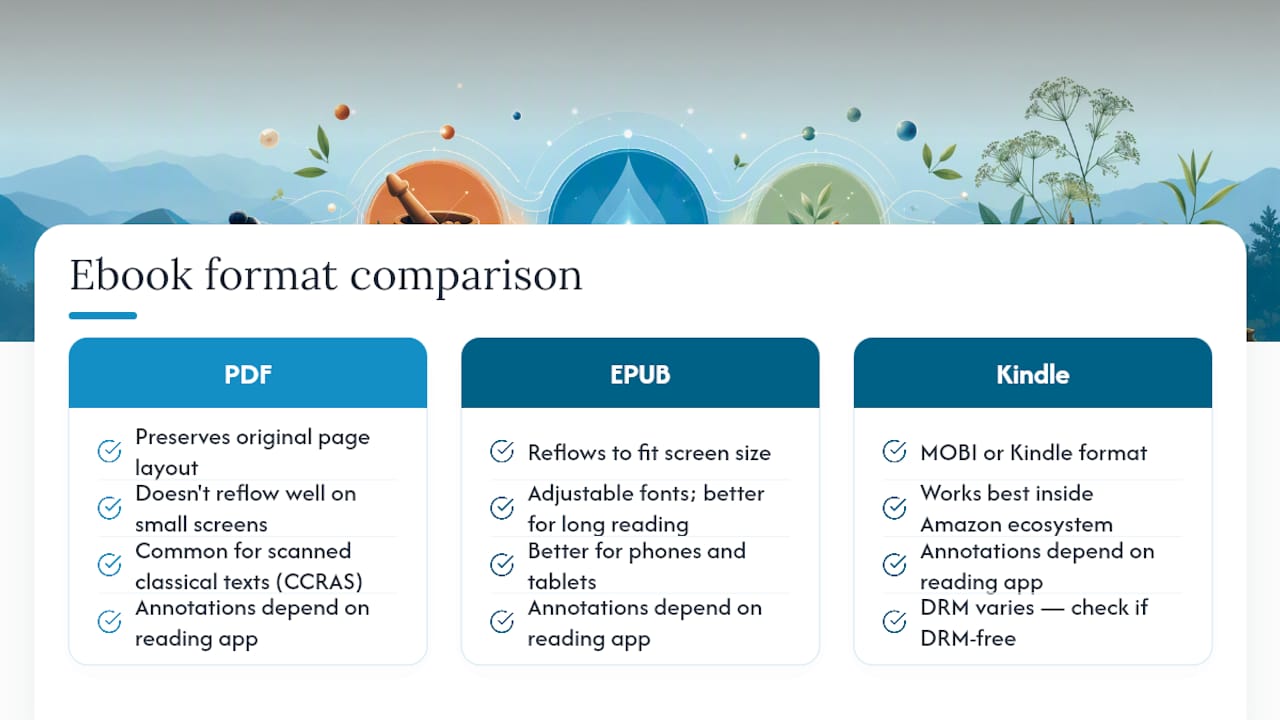
For annotation, look for reading apps with highlighting and dictionary lookup built in, and check whether your library syncs notes across devices. One more thing worth checking: whether the file is DRM-free. That determines whether you can freely annotate, back up, and keep long-term access to a book you’ve paid for.
A Study Path for Learning Ayurveda From Ebooks
A staged approach beats trying to absorb everything at once, and it mirrors what experienced practitioners generally recommend: small, testable changes before big conceptual leaps.
- Start with daily-living guides. Pick one or two changes from a practical cooking or lifestyle ebook and track how your digestion or energy responds over a week or two.
- Build toward intermediate texts. Once those small habits feel stable, move into clinical-overview books covering pulse assessment and treatment frameworks.
- Deepen with classical texts. Read the Charaka Samhita or Sushruta Samhita in an annotated edition, ideally alongside a teacher or study group who can answer questions the footnotes can’t.
The biggest beginner mistake isn’t picking the wrong book. It’s treating a single ebook as a finished solution rather than a tool for ongoing self-observation. Reading about digestion doesn’t change your digestion; testing one recommendation for two weeks does.
Pro Tip: Keep a simple daily log (energy, sleep, digestion) for two weeks after any change. Without it, you won’t know whether a recommendation from a book is actually working for you.

Common pitfalls to skip: buying five books before finishing one, starting with Sanskrit terminology before basic concepts click, and ordering rare classical editions without checking if a supplier ships internationally, since many primary editions are printed in India and require specialty suppliers.
Is It Legal to Download Ayurveda Ebooks for Free?
Many classical Sanskrit texts exist in public-domain translations or government-hosted PDFs, since the original works predate modern copyright by centuries. Modern commentary, translations, and cookbooks are a different story. They’re copyrighted works with active rights holders.
- Check the copyright or rights page before downloading anything that isn’t from a government or university source.
- A missing ISBN or publisher listing is a red flag for an unauthorized scan.
- Government archives like CCRAS clearly state their public availability.
Historical texts describe traditional frameworks for wellness, not medical treatment protocols. Always consult a qualified healthcare professional before acting on any dosing, herb, or treatment information you read in a classical or modern Ayurveda text.
What I’ve Noticed About Self-Study With Ebooks
The readers who stick with Ayurveda long-term rarely start with the Charaka Samhita. They start with a cookbook or a simple dosha guide, notice something shift in how they feel, and get curious enough to go deeper. Ebooks make that low-stakes experimentation possible in a way a $60 hardcover doesn’t. That said, no ebook, however well annotated, replaces a practitioner when you’re dealing with a real health concern. Use these texts to learn the framework, not to self-diagnose.
Building Your Ayurveda Ebook Library With Ebook Warehouse
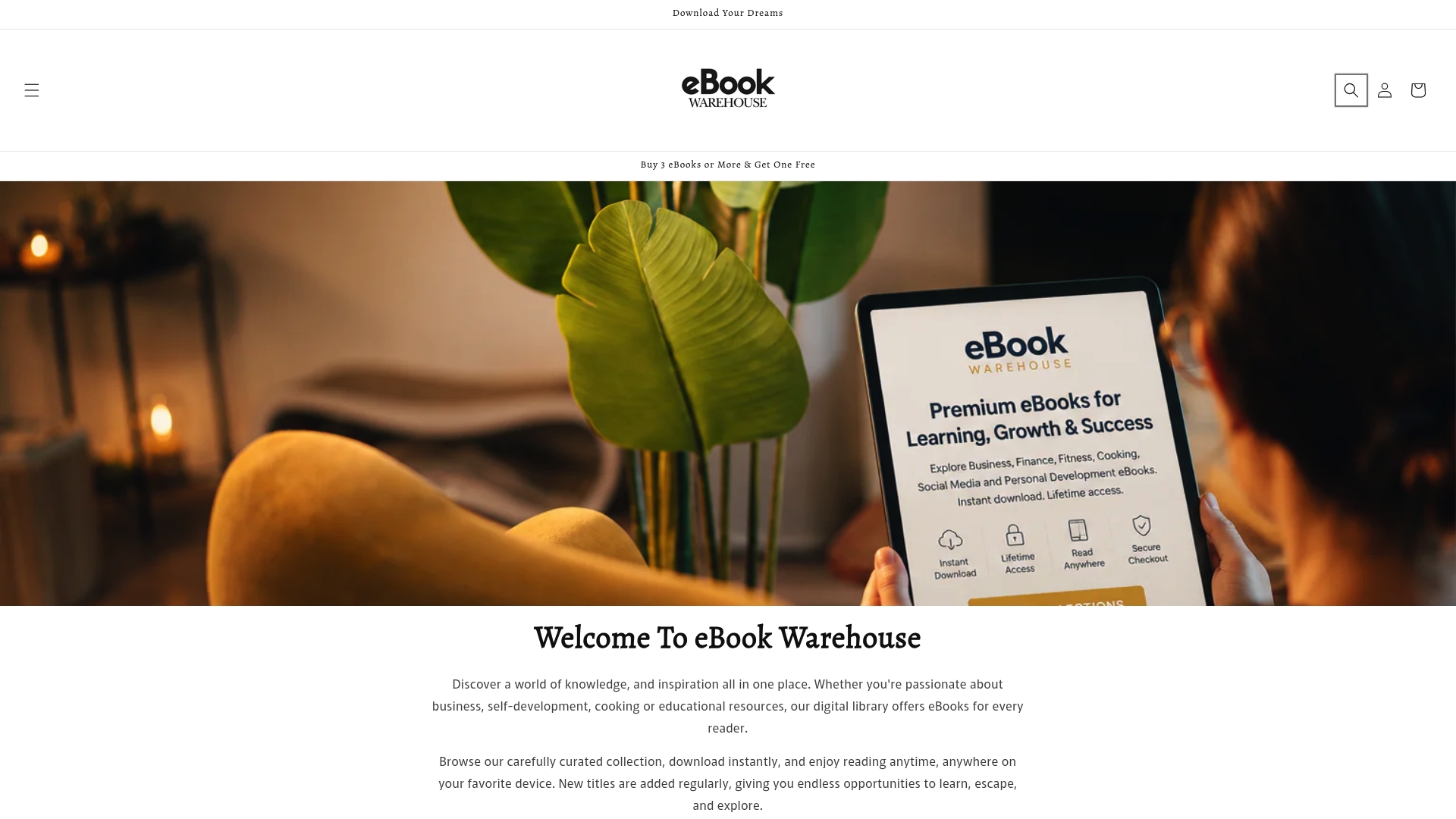
If chasing down scanned PDFs and cross-checking translator credentials sounds like more work than reading itself, Ebook-warehouse solves the modern-title half of that problem in one place. The collection focuses on curated wellness and cooking guides you can download instantly as PDFs, readable on your phone, tablet, or laptop the moment you check out, no waiting on shipping or digging through forums for a decent translation.
Ebook-warehouse’s Top Cooking Books collection is a solid starting point if you want dosha-friendly recipes without hunting for Ayurveda-specific publishers, and titles like the Curry Cookbook adapt well to Western kitchens. Pair a cooking guide with a lifestyle title from the spirituality collection if you want to build daily routines alongside diet changes. Browse the current wellness titles and start with whichever practical guide matches the habit you want to test first.
Frequently Asked Questions
Are Ayurveda ebooks about classical texts free to download? Many are. Government archives like CCRAS host public-domain PDFs of texts such as the Charaka Samhita at no cost, though modern commentary editions with added translator notes are usually paid.
What’s the best Ayurveda ebook for absolute beginners? A practical cooking or lifestyle guide beats a classical text every time for someone just starting out. Try a free collection like Saumya Ayurveda’s before investing in anything technical.
Do I need to read Sanskrit to study classical Ayurveda texts? No. Annotated English translations with editor commentary, like the Charaka Samhita handbook edition, are built specifically so readers without Sanskrit training can follow the concepts.
What ebook format works best for studying Ayurveda texts? PDF suits scanned classical texts since it preserves original formatting. EPUB works better for modern books you’ll read on a phone, since text reflows to fit smaller screens.
Where can I buy modern Ayurvedic cooking and lifestyle ebooks? Ebook-warehouse curates wellness and cooking titles available as instant PDF downloads, a practical option once you’re ready to move past free introductory guides.
This article is general information, not a substitute for advice from a qualified doctor. Consult a qualified healthcare professional about your own circumstances before acting on anything here.
Sources
- E-Books - Central Council for Research in Ayurvedic Sciences
- Ayurveda Books for Self-Study: Beginner to Advanced Learning Path
- Charaka Samhita (edited handbook) PDF
- 9 Free Ayurveda eBooks by Saumya Ayurveda
- Ayurvedic Medicine, 2nd Edition by Sebastian Pole | Hachette UK