

Business Plan Ebooks for Founders: Templates You Can Use
Get Better Business Planning and the Business Growth Bundle from Ebook-warehouse if you want template depth plus modern marketing chapters, E-Book Entrepreneur if you’re starting from zero, and pair either with the free Open Textbook Library’s Business Plan Development Guide and the SBA’s business plan templates for the pieces a paid guide won’t cover for free.
- Better Business Planning: best for structured, template-driven planning
- Business Growth Bundle: best for pairing planning with growth and marketing tactics
- E-Book Entrepreneur: best for total beginners who need plain-language guidance
- Open Textbook Library: best free academic-grade reference with spreadsheets
- SBA templates: best for lender or loan-ready formatting at no cost
Key Takeaways
A working business plan comes from pairing a template-first eBook with a fixed six-week workflow and monthly reviews, not from reading a guide cover to cover once.
| Point | Details |
|---|---|
| Match eBook to goal | Choose a workbook for a side hustle, a deeper guide for investors, and templates for lenders. |
| Check the standard sections | Confirm executive summary, market research, business model, operations, and financials are all covered. |
| Verify modern content | Look for digital marketing, e-commerce, crowdfunding, and AI-forecasting guidance in recent editions. |
| Use free templates too | Pull spreadsheets from the Open Textbook Library and SBA before paying for extras. |
| Review monthly, not once | Treat the plan as a living document and revisit milestones and cash flow every month. |
| Start with Ebook-warehouse | Better Business Planning and the Business Growth Bundle deliver templates plus growth guidance in one purchase. |
Table of Contents
- Who a business plan ebook actually helps
- What should be inside a good business plan ebook?
- How do you choose the right business plan ebook?
- From ebook to working plan: a lean 6-week workflow
- Recommended Ebook-warehouse titles and how to use each
- Where can you get free business plan templates?
- Templates over glossy charts: what founders miss
- If you want a ready-to-use option
- Frequently Asked Questions
- Sources
Who a business plan ebook actually helps
A workbook-style eBook fits someone building a side hustle who needs a one-page model, not 40 pages of prose. Someone chasing a bank loan needs a text with financial forecast templates and lender-ready formatting, closer to what Brian Finch covers in How to Write a Business Plan. An investor pitch calls for a deeper read that stress-tests the opportunity and the team, not just the numbers.
- Bank loan applicants: pick a template bundle with editable spreadsheets and sample financials
- Investor-track founders: pick a deeper textbook-style guide with real case examples
- Side hustlers testing an idea: pick a short, exercise-driven workbook like the MoreBusiness Business Plan Workbook
- Students or curriculum users: pair a free academic resource with a paid guide for structure
If your goal is a lender-ready document, pair your eBook with SBA templates before you submit anything. If you’re still validating the idea, skip the templates and lean on a lighter workbook first.
What should be inside a good business plan ebook?
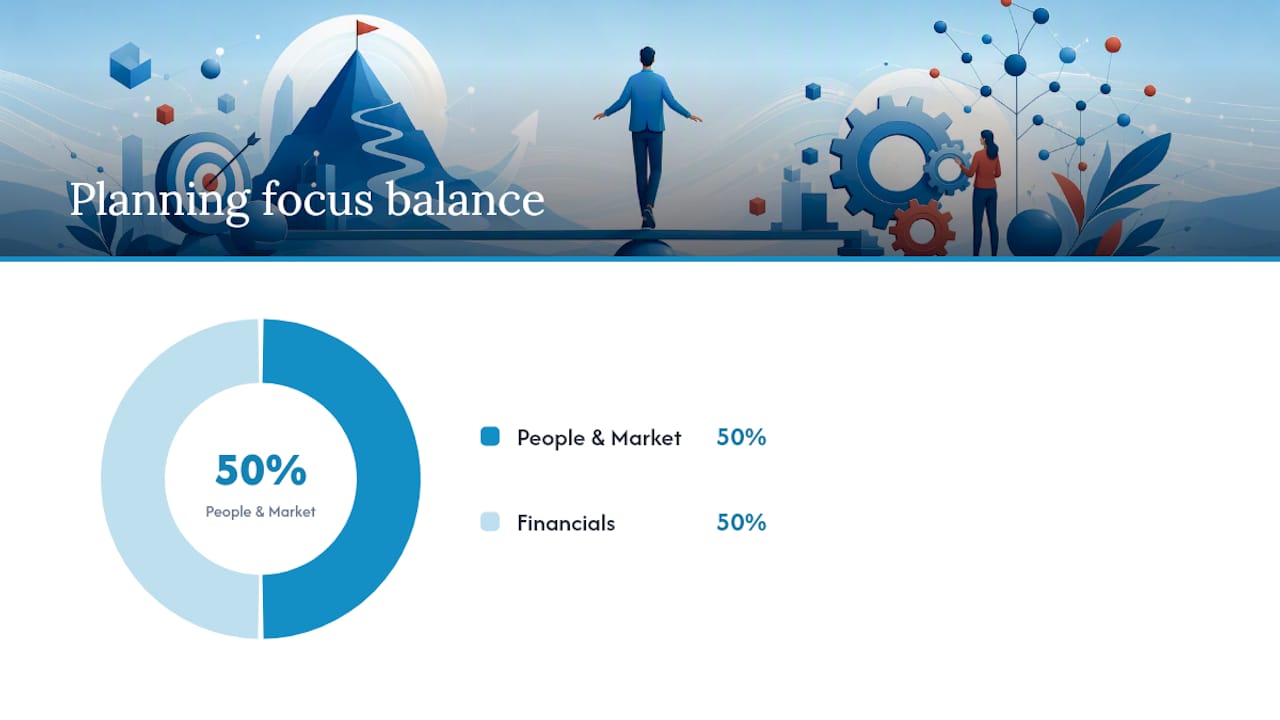
A useful eBook covers the same backbone every lender and investor expects to see: an executive summary, market research, your business model, an operations plan, a management section, and financial forecasts. If a title skips financial forecasts or treats the business model as an afterthought, put it back on the shelf.
Beyond structure, look for actual deliverables you can open and use:
- Downloadable spreadsheets for revenue, expenses, and cash flow
- Sample financials you can benchmark your own numbers against
- Editable Word or PDF templates, not locked, static pages
- Sample chapters or excerpts you can preview before buying
Modern eBooks now go further than the classic template. Authoritative planning resources increasingly recommend folding in digital marketing, e-commerce, and crowdfunding strategies, along with AI tools for forecasting and market analysis. A 2026 edition that ignores online customer acquisition or AI-assisted forecasting is behind the curve, and updated titles like Business Plans For Dummies, 3rd edition show what a properly refreshed guide looks like: digital strategy, new funding sources, and disruption planning added alongside the classic chapters.
Pro Tip: Flip to the financial forecasting chapter before you buy. If it’s mostly polished charts with little explanation of the assumptions behind them, walk away. A plan heavy on visuals and light on reasoning is a red flag investors catch fast.
Harvard Business School’s William A. Sahlman built his entire framework around this exact failure mode: elaborate financials can mask weak thinking about the people, the opportunity, and the context behind the numbers. A good eBook spends as much time on your team and market as it does on your spreadsheet.
How do you choose the right business plan ebook?
Run every candidate through the same six-point filter before you check out.
- Best for: does it target beginners, lenders, or investors? Match it to your actual goal.
- Templates included: are spreadsheets and worksheets bundled in, or sold separately?
- Depth and real examples: does it use worked examples from real industries, or generic placeholders?
- Format compatibility: PDF, Kindle, and mobile friendly, or locked to one device?
- Price and bundle value: does a bundle beat buying two titles separately?
- Edition date and author credentials: is it recently updated, and does the author have relevant experience?
Before you check out, run through this quick list:
- Preview a sample chapter or table of contents
- Confirm spreadsheets are editable, not flattened into images
- Check the last revision or edition date in the product description
- Look for author background in business planning, not just marketing copy
- Scan reviews or ratings if the seller shows them
Sample chapters and spreadsheet previews are the fastest trust signals you’ll find on any product page. If a listing hides its table of contents or won’t show a sample page, treat that as a warning sign, not an oversight.
From ebook to working plan: a lean 6-week workflow
Buying the eBook is step zero. Turning it into a plan you’ll actually use takes about six weeks if you follow a fixed schedule instead of reading passively.
- Week 1: Market sizing. Use the market research chapter to define your total addressable market and your realistic first-year slice.
- Week 2: Customer profile. Draft one detailed customer persona based on real conversations, not assumptions pulled from a template.
- Week 3: One-page model. Compress your business model into a single page: revenue streams, cost structure, channels.
- Week 4: Financial forecasts. Build a 12-month cash flow projection using the eBook’s spreadsheet template, then stress-test your assumptions with a simple sensitivity check instead of a 60-page deterministic forecast.
- Week 5: Milestones. Set three measurable milestones for the next quarter, tied to cash flow, not vanity metrics.
- Week 6: Pitch-ready summary. Condense everything into a two-page executive summary you could hand to a lender or investor tomorrow.
After week 6, don’t close the document. Lean planning treats the plan as a living document, reviewed monthly against cash flow and milestone performance, with course corrections built in rather than a full rewrite.
Pro Tip: Write your top five assumptions on a separate page, next to your financial model. Every month, check which ones held up and which ones broke. That single habit catches bad forecasts faster than any spreadsheet formula will.
Recommended Ebook-warehouse titles and how to use each
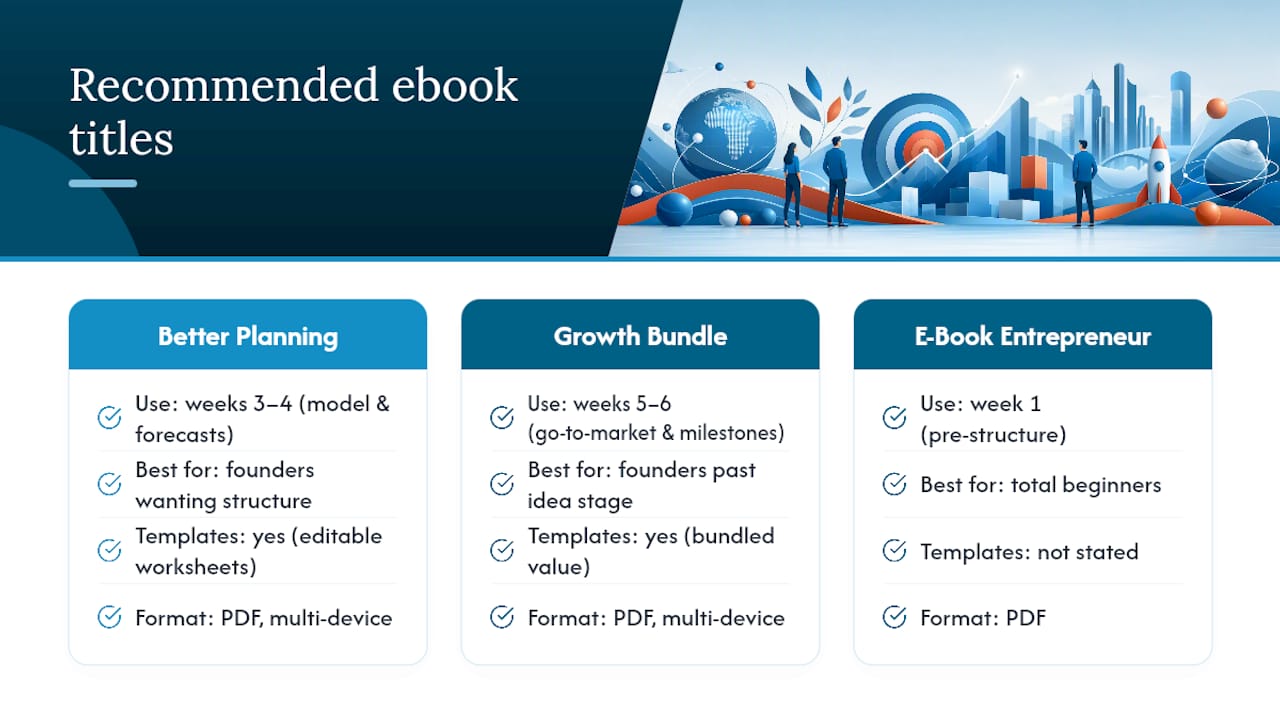
Better Business Planning is the strongest pick for template depth. It’s structured around the classic executive summary through financials sequence, includes editable planning worksheets, and works best in weeks 3 and 4 of your workflow when you’re building the one-page model and financial forecasts. Best for: founders who want structure without a business degree. Templates included: yes. Format: PDF, works across devices.
Business Growth Bundle pairs planning fundamentals with marketing and growth tactics, making it the right pick once your plan exists and you need to execute on customer acquisition. Use it in weeks 5 and 6 when milestones and go-to-market decisions take center stage. Best for: founders past the idea stage who need growth playbooks alongside planning. Templates included: yes, bundled value beats buying separately. Format: PDF, multi-device.
E-Book Entrepreneur is the entry point for someone who’s never written a plan before. Plain language, minimal jargon, and a good fit for week 1, before you’ve committed to any specific structure. Best for: total beginners. Format: PDF.
Pair Better Business Planning with the Open Textbook Library guide if you want a second, free reference for the market research chapter, and lean on SBA templates if you need lender-specific formatting the eBook doesn’t cover. For founders building a digital storefront alongside their plan, the digital marketing eBooks roundup fills the customer-acquisition gap.
Where can you get free business plan templates?
Not everything needs to come from a paid guide. The Open Textbook Library’s Business Plan Development Guide is a full, free textbook with chapters on market research and business models, plus spreadsheet templates you can drop straight into week 2 and week 4 of your workflow.
The SBA’s business plan templates and worksheets are the standard reference if you’re heading toward a bank loan. Copy their financial statement structure into your week 4 forecasting work so your numbers match what a loan officer expects to see.
- Open Textbook Library: free, PDF format, use for market research and business model chapters
- SBA templates: free, PDF and editable formats, use for lender-ready financial statements
- Workbook-style PDFs (like MoreBusiness’s workbook): use for quick exercises when you’re short on time
All three work on desktop, tablet, and most e-readers, so device compatibility isn’t a real constraint here.
Templates over glossy charts: what founders miss
Most people obsess over financial formatting and skip the part that actually predicts survival. Sahlman was right decades ago and it still holds: people, opportunity, context, and honest risk assessment carry more weight than a polished five-year forecast nobody can defend in a room.
The pitfall I see constantly is founders who over-detail their forecasts down to the dollar while skipping actual customer interviews, then abandon the plan the moment it’s finished instead of reviewing it monthly. An eBook is a starting template, not a finished answer. Pair it with real templates and a recurring review, or the plan goes stale in a drawer.
If you want a ready-to-use option
Ebook-warehouse gets you a working plan faster than piecing together free PDFs from five different sites, because Better Business Planning and the Business Growth Bundle already include the editable templates, sample financials, and marketing chapters you’d otherwise have to hunt down separately.
Buy them together and you cover both the planning structure and the growth execution in one purchase, readable across your laptop, tablet, or phone the moment you check out. If you’re still deciding between a beginner guide and a full bundle, start with Better Business Planning and add the Business Growth Bundle once your first draft is done.
Frequently Asked Questions
Are business plan ebooks worth it compared to hiring a consultant? For most early-stage founders, yes. A quality eBook with templates covers the same structure a consultant charges hundreds of dollars to walk you through, and you can always add coaching later once your draft plan raises specific questions.
Do business plan ebooks work for both startups and existing small businesses? Yes, though the emphasis shifts. Startups lean harder on market sizing and opportunity assessment, while existing businesses use the same templates mainly for financial forecasting and operational planning.
Can I use a business plan ebook to apply for an SBA loan? You can, but pair it with the SBA’s own templates to make sure your financial statements match the exact format lenders expect.
How often should I update my business plan after writing it? Review it monthly against your milestones and cash flow, following the lean planning approach of treating the document as ongoing, not a one-time deliverable you finish and shelve.
Do these eBooks work on Kindle and mobile devices? Most PDF-based business eBooks, including Ebook-warehouse titles, open fine on phones, tablets, and Kindle apps that support PDF import, though native Kindle formatting varies by title.
Sources
- How to write a great business plan — Harvard Business School (William A. Sahlman)
- Business Plan Development Guide — Open Textbook Library
- Business Plans For Dummies, 3rd Edition — Wiley