

Home Workout Ebooks for Every Level: Curated Picks
The three downloadable fitness guides worth grabbing right now are Fast Track Fitness HIIT Workouts, Training With A Light Resistance Band, and The Bible of Bodybuilding for Busy People — all available as instant PDF downloads from Ebook-warehouse, covering HIIT, band training, and structured strength work respectively. Start by previewing the sample pages on each product page before you add anything to your cart.
These are curated, author-backed programs, not random PDFs scraped from a fitness forum. Each comes in PDF format, which opens on any phone, tablet, or laptop without special software.

Table of Contents
- What do home workout ebooks actually include?
- How do you pick the right home workout ebook for your goals?
- Ebook-warehouse picks: which fitness ebooks should you download?
- When are free PDF workouts good enough — and when aren’t they?
- How to use a home workout ebook: a 4-week starter plan
- Key Takeaways
- Why a structured ebook beats a folder full of random PDFs
- Get the recommended ebooks from Ebook-warehouse
- Useful sources and where to find sample programs
What do home workout ebooks actually include?
The term “home workout ebook” covers a wide range of digital fitness guides, from a 10-page beginner bodyweight PDF to a fully periodized 12-week strength program with exercise libraries and modification notes. Knowing what to expect inside one saves you from buying the wrong thing.
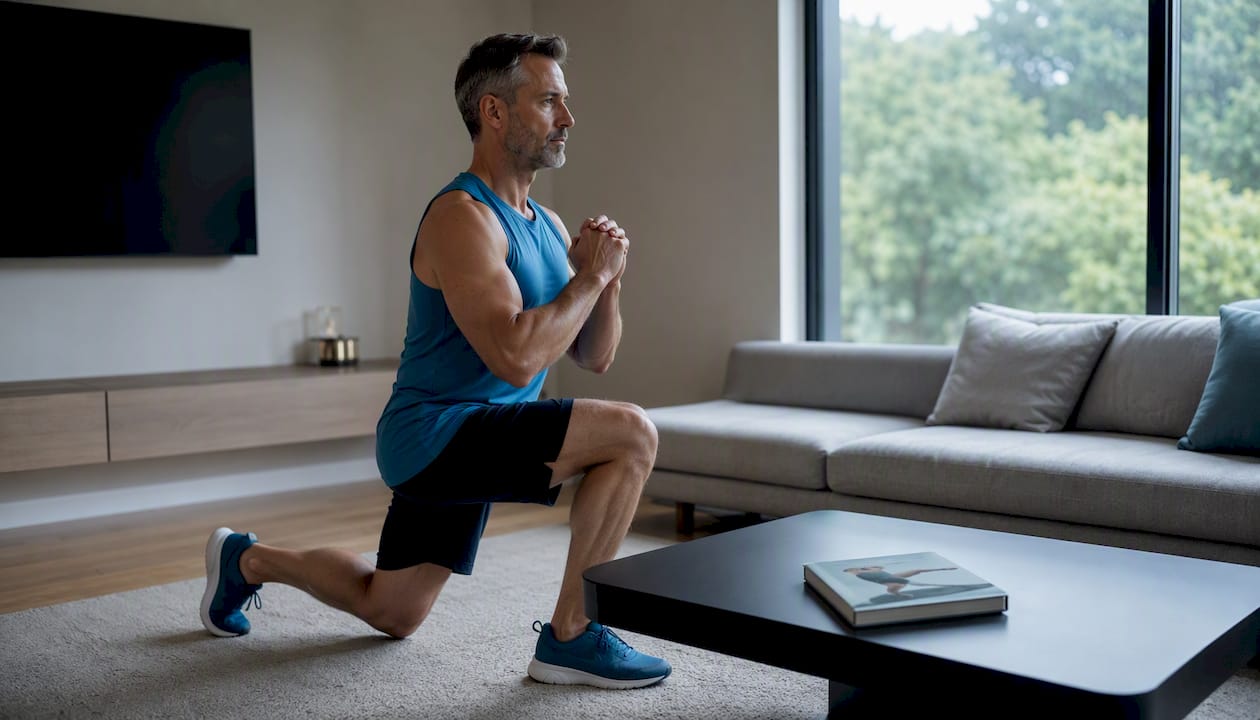
File format and device access. Most downloadable fitness guides ship as PDFs, allowing access across various operating systems without needing special software. Some programs bundle video links or QR codes alongside the PDF, but the PDF itself is the core document.
Program types you’ll find. The most common categories:
- Bodyweight/no-equipment circuits (push-ups, squats, lunges, core work)
- HIIT (high-intensity interval training) sessions, typically 20–30 minutes
- Strength programs using dumbbells, kettlebells, or resistance bands
- Band and jump-rope conditioning for cardio and endurance
- Mobility routines and flexibility programs
Typical session and program lengths. Standard home workout programs typically use periodization cycles running 30 days to 12 weeks, with session durations typically lasting 30–90 minutes and a frequency of 3–5 sessions per week (beginners are often advised to start at the lower end of that range).
| Variable | Typical range |
|---|---|
| Session length | 30–90 minutes |
| Program duration | 30 days to 12 weeks |
| Weekly frequency | 3–5 sessions per week |
What preview pages show you. A well-built program preview usually includes a sample week’s exercise list, demonstration images or diagrams, progression notes, and modification options for different fitness levels. Professional programs organize workouts by equipment required, time commitment, and training type (strength vs. conditioning) so you can pick the right session on any given day.
How do you pick the right home workout ebook for your goals?
The fastest way to choose is to match the program to four things: your goal, your available equipment, your weekly time budget, and your experience level. Work through this checklist before you buy.
- Define your primary goal. Fat loss, muscle building, mobility, or general conditioning each call for a different program structure. A HIIT-focused guide is not the same as a 12-week progressive strength plan.
- Check equipment requirements. Some programs need nothing but floor space. Others call for a resistance band, a set of dumbbells, or a jump rope. Confirm what’s required before downloading.
- Match session length to your schedule. A 60-minute program you skip three times a week beats nothing. If you have 25 minutes on weekday mornings, look for programs built around that window.
- Assess your experience level. Beginner programs emphasize form cues and lower volume. Intermediate and advanced plans assume you know the movements and focus on progressive overload.
- Check the product page for these trust signals. Look for sample workouts or preview pages, an author or trainer bio, customer reviews or ratings, and a clear refund or satisfaction policy. Product pages that list included assets — exercise libraries, video tutorials, nutrition samples — give you the clearest picture of what you’re buying.
- Evaluate bundle value. A single eBook makes sense for a specific goal. Multi-title bundles are often discounted and work well when you want variety across several months.
Red flags to skip past. No sample pages, a vague or missing author bio, no refund policy, and zero modification guidance are all signs a program was assembled quickly. A legitimate fitness guide tells you exactly who wrote it and what to do if an exercise doesn’t work for your body.
Ebook-warehouse picks: which fitness ebooks should you download?
These three titles from Ebook-warehouse cover the most common home training goals. Each is a PDF download with instant access after purchase.
Fast Track Fitness HIIT Workouts
- Best for: Anyone who wants short, high-intensity sessions and minimal equipment
- Difficulty: Intermediate
- Format: PDF, instant download; sample pages available on the product page
- Why it works: HIIT programs are built around work-to-rest ratios, so sessions stay short without sacrificing intensity. This guide suits people with 20–30 minutes per session and no interest in buying weights.
Training With A Light Resistance Band
- Best for: Beginners and travelers who want full-body resistance work with one piece of gear
- Equipment: A single light resistance band
- Difficulty: Beginner to intermediate
- Format: PDF download; check the product page for preview content and current pricing
Bands are underrated for building real strength. A light band creates constant tension through the full range of motion, which free weights don’t always do. This guide covers the mechanics and gives you a structured program rather than a list of random exercises.
The Bible of Bodybuilding for Busy People
- Best for: Readers who want structured strength progression but have limited training time
- Difficulty: Intermediate to advanced
- Equipment: Minimal — bodyweight-focused with optional small equipment
- Format: PDF, instant download
The title signals the scope: this is a reference-level guide, not a 4-week challenge. It suits someone who wants to understand why a program is structured the way it is, not just follow a template. Check the product page for the sample preview before purchasing.
For readers newer to exercise, A Woman’s Guide to Fitness and Exercise Your Way to Physical Health are two additional beginner-friendly options in the store.
Pro Tip: When evaluating any product page on Ebook-warehouse, look specifically for the sample pages link and the refund policy note — those two details tell you more about a program’s quality than the description copy does.
When are free PDF workouts good enough — and when aren’t they?
Free workout PDFs have a real place in a training toolkit. The question is knowing when they’re sufficient and when they leave you stuck.
Free plans work well when:
- You’re building a short-term habit (a 2-week challenge, a travel routine)
- You’re a beginner learning basic movement patterns before committing to a paid program
- You want to test a training style (HIIT, bands, bodyweight) before spending money
A free 2-week bodyweight plan running 30 minutes per day, five days a week, with daily video demos is a legitimate starting point. For short-term routines, that format works.
Free plans fall short when:
- You need structured periodization (progressive overload across 8–12 weeks)
- You want modification guidance for injuries or fitness limitations
- You’re past the beginner stage and need programming that adapts to your progress
Large free collections — the kind that offer hundreds of circuits with no equipment — prioritize variety over progression. You get options, but the program doesn’t build on itself week to week. That’s fine for general activity; it’s not enough for consistent strength or conditioning gains.
How to vet a free download before you use it. Check for clear exercise descriptions with rep and set counts, a recommended weekly frequency, and at least some notes on scaling difficulty. A PDF that just lists exercises with no structure around them is a reference sheet, not a program.
One practical approach: use a free HIIT circuit PDF for your cardio days while running a paid 12-week strength progression as your main program. The two formats complement each other without overlap.
How to use a home workout ebook: a 4-week starter plan
Downloading a program is the easy part. The gap between downloading and actually finishing a 12-week plan is where most people lose momentum. A short starter structure helps.
4-week progression table
| Week | Sessions/week | Session length | Intensity focus |
|---|---|---|---|
| 1 | 3 | 30 min | Technique and baseline |
| 2 | 3–4 | 30 min | Volume increase |
| 3 | 4 | 30 min | Progressive overload |
| 4 | 3 | 30 min | Deload and recovery |
This pattern maps to the 30-day and 12-week program structures used in most downloadable plans. Week 4 is intentionally lighter — a deload week protects against overuse and keeps you fresh for the next training block.
Safety guidance. Always include a 5-minute warm-up before any session. Mobility work (hip circles, shoulder rolls, thoracic rotations) before strength sessions reduces injury risk. Follow the progressive overload principle: add reps, sets, or resistance only when the current load feels controlled. If a movement causes sharp joint pain, scale back or substitute. Well-structured programs recommend adding low-impact cardio (walking, cycling) 1–3 times per week alongside strength sessions for balanced conditioning.
Treat the program as a template, not a rigid schedule. Shift workouts within a week to match your life, and adjust volume based on how recovered you feel rather than following the order mechanically.
Pro Tip: On your phone, open the PDF in Safari, tap the Share icon, and select “Add to Home Screen.” The file behaves like a quick-launch app — one tap and you’re on today’s workout, no searching required.
Key Takeaways
The most effective approach to home workout ebooks is to match a curated, structured PDF to your specific goal and equipment, preview sample pages before buying, and follow a progressive 4-week starter plan from day one.
| Point | Details |
|---|---|
| Match program to goal | Choose HIIT, band, strength, or mobility based on your primary objective before browsing. |
| Preview before you buy | Check sample pages, trainer bio, and refund policy on every product page — these are the clearest quality signals. |
| Session and program ranges | Standard programs run 30 days to 12 weeks; sessions typically last 30–90 minutes at 3–5 days per week. |
| Free PDFs have limits | Short-term and beginner use cases suit free plans; structured progression requires a paid, periodized program. |
| Ebook-warehouse picks | Fast Track Fitness HIIT Workouts, Training With A Light Resistance Band, and The Bible of Bodybuilding for Busy People cover the three most common home training goals. |
Why a structured ebook beats a folder full of random PDFs
The conventional advice is to “just find a free workout online.” And technically, you can. There are thousands of free circuits, challenge PDFs, and YouTube routines available right now. The problem isn’t access — it’s structure.
Random PDFs don’t talk to each other. Week 3 of a free HIIT challenge has no relationship to week 4 of a different bodyweight PDF you downloaded from somewhere else. You end up with a patchwork of unrelated sessions that never build on each other. Progress stalls not because you’re not working hard enough, but because the programming isn’t designed to accumulate.
A curated, author-backed ebook solves this with one decision. The progression is already mapped. The modification options are already written in. The author’s credentials tell you whether the programming logic is sound. And a clear refund policy means the publisher is confident enough in the product to stand behind it.
There’s also a psychological dimension worth acknowledging. Paying for a program, even a modest amount, creates a commitment that a free download rarely does. The folder of free PDFs on your phone is easy to ignore. The program you paid for and previewed before buying is harder to skip.
The readers who get the most out of downloadable fitness guides are the ones who treat the PDF as a coach, not a reference sheet. They follow the progression, respect the deload weeks, and use the modification notes when something doesn’t feel right. That’s the difference between a program that works and one that sits unopened after week two.
Get the recommended ebooks from Ebook-warehouse
Ebook-warehouse carries all three recommended programs as instant PDF downloads, with no subscription and no waiting for shipping. The store’s fitness catalog covers HIIT, band training, strength programming, and beginner guides — each with sample pages on the product page so you can check the content before purchasing.

When available, the buy-three-get-one-free bundle offer makes it practical to grab a HIIT guide, a strength program, and a band-training PDF together at a lower combined cost than buying separately. That combination covers most training days across a full 12-week block.
Visit the product pages for Fast Track Fitness HIIT Workouts and Training With A Light Resistance Band to preview sample pages, check current pricing, and add to cart. If you run into any issues after purchase, Ebook-warehouse’s support team handles download and access questions directly. Refund and satisfaction details are listed on each product page — read them before checkout if that matters to your decision.
Useful sources and where to find sample programs
These sources let you inspect sample workouts, download free PDFs, and compare program structures before committing to a purchase.
- Fast Track Fitness HIIT Workouts — Ebook-warehouse: Product page with sample preview; instant PDF download after purchase.
- Training With A Light Resistance Band — Ebook-warehouse: Full band-training program; check the page for current bundle pricing.
- The Bible of Bodybuilding for Busy People — Ebook-warehouse: Structured strength reference; sample pages available on the product page.
- Best Fitness Enhanced eBooks — Goodreads: Reader-curated list for broader discovery of popular fitness ebook titles and formats.