

Top 5 Kindle Alternatives Marketplaces 2026
Finding a downloadable ebook marketplace that offers flexible pricing, broad catalog access, and device compatibility is difficult for most independent readers and creators. Many major retailers rely on proprietary formats, device lock-in, or restrict pricing and catalog control for indie authors. This comparison covers pricing, promotion, file formats, and catalog diversity across five marketplaces so readers and creators can pick one for their digital content needs.
Table of Contents
eBook Warehouse
At a Glance
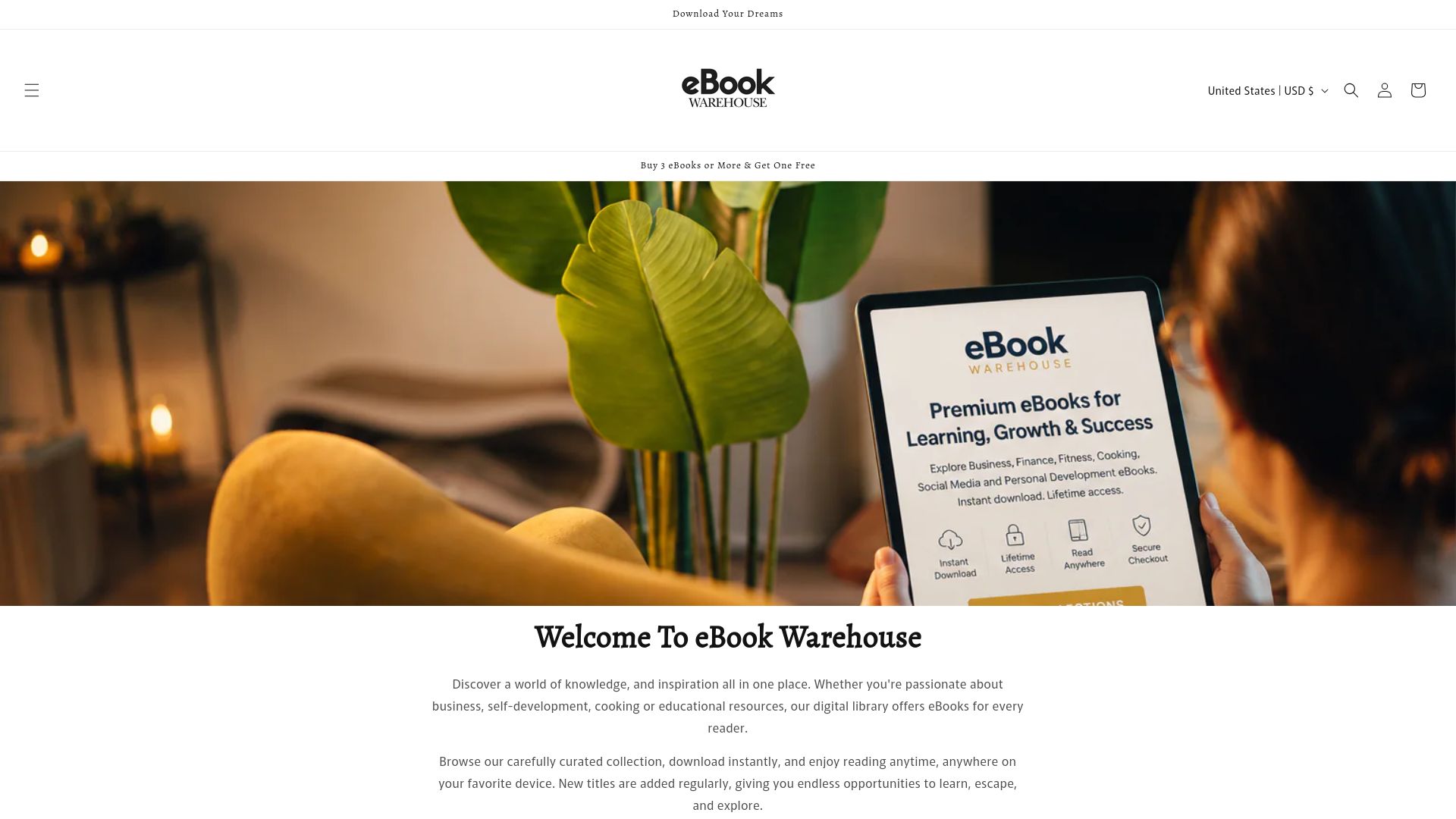
Most titles cost $5.00–$6.00 USD, and the store runs bundle promotions such as buy 3, get 1 free. Purchases deliver an immediate PDF download, so you can open a book on any device right away. The catalog focuses on business, self-development, cooking, social media, and education and is updated regularly.
Core Features
The site supports instant download after purchase and secure checkout with multiple payment options including PayPal, credit cards, and digital wallets. Catalog curation emphasizes educational and professional titles, and new releases and bestsellers appear frequently. Files are delivered as PDFs to maximize compatibility with tablets, phones, and desktop readers.
Key Differentiator
Offers a curated, constantly updated digital library of educational and professional eBooks with instant download and secure payment options. That curation narrows selection to practical, work-related titles rather than a mass-market inventory. For readers who want focused collections for learning or business, the catalog reduces time spent hunting for relevant material.
Pros
The collection is targeted toward learners and practitioners, which makes it easy to find business guides, marketing workbooks, and cooking manuals. The checkout process accepts multiple payment methods and completes quickly, so you receive a downloadable PDF the moment the sale clears. Regular updates and occasional bundle deals keep costs low for people buying multiple titles.
Cons
- Mostly PDF format, which may not be compatible with all eReaders.
Who It’s For
Entrepreneurs, small business owners, bloggers, students, and lifelong learners who want low-cost, immediate access to educational eBooks. People who prefer reading PDFs on tablets or laptops will get the most value. Buyers who need print copies or EPUB files for certain eReaders should look elsewhere.
Unique Value Proposition
Most eBooks land in the $5.00–$6.00 USD range and the store advertises bundle discounts, so buying several practical guides becomes inexpensive for small teams or solo learners. That predictable price band plus instant PDF delivery reduces the friction between purchase and application of the content. For readers who want to act on what they learn within hours, this pricing and delivery mix shortens the gap.
Real World Use Case
A small business owner purchases a marketing workbook, downloads the PDF immediately, and reads it on a tablet during a commute. They apply a tactic from the workbook the same day and adjust their site copy later that evening. The immediate download and practical focus let them convert reading into action within hours.
Pricing
Most eBooks sell for $5.00–$6.00 USD per title. The site runs promotions such as buy 3, get 1 free and occasional discounts on bundles. There are no subscription plans; each book is purchased individually.
Website: https://ebook-warehouse.com
ebooks.com
At a Glance
ebooks.com lists a broad catalog that spans fiction, textbooks, and niche nonfiction with frequent promotions. The store emphasizes low-cost options and regular discounts that help stretch a student or casual reader budget. Its model relies on a proprietary reading application for many purchases.
Core Features
The marketplace offers an extensive digital catalog across genres with a search and discovery system that highlights new releases and bestsellers. The site supports multiple download formats, including PDF and ePub, and runs a newsletter that delivers deals and curated picks. Purchase and instant download workflows aim to be straightforward for one-off buyers and bulk purchasers.
Key Differentiator
ebooks.com positions itself as an independent alternative to larger retailers by focusing on competitive pricing and frequent promotions. That angle targets readers who prioritize price and selection over strict device compatibility. The tradeoff is reliance on proprietary software for reading and file management.
Pros
The marketplace carries a wide selection of titles across popular and specialized categories, which helps readers find uncommon or academic works. Competitive pricing and regular discounts reduce the cost of textbooks and leisure reads. Instant downloads simplify access after purchase and make short-notice study buying practical. The newsletter brings timely deals and release alerts to people who want cheaper textbooks or new releases. The platform serves independent authors and publishers, giving readers access to works not always available on major storefronts.
Cons
- Proprietary reading software can block direct use on devices that expect vendor-neutral formats, such as some e-readers.
- Several users report the site interface and reading experience feel cluttered, which affects long reading sessions.
- Managing files across multiple devices can be awkward when proprietary formats require special steps.
- Occasional technical glitches with downloads can interrupt access to purchased titles.
When It May Not Fit
If you rely on a Kindle or another e-reader that accepts only vendor-neutral files, this marketplace may not be a good match. Libraries or institutions that need standardized file delivery might face extra conversion work. Buyers who expect a polished reader app and frictionless file syncing will likely find the platform limiting.
Who It’s For
This marketplace fits budget-conscious readers who want a broad selection of titles and who accept the need for a proprietary reading app. Students who watch for textbook deals and readers looking beyond mainstream retailers will get the most value. People who demand flawless device interoperability should look elsewhere.
Real World Use Case
A college student signs up for the newsletter to track textbook discounts. They buy several required readings during a promotion and download them in compatible formats. The student reads on a laptop and tablet, and occasionally must convert or rejigger files to use a separate e-reader.
Pricing
Most titles range from $1.99 to $60. Frequent discounts, bundles, and promotions lower street price for many books. Newsletter subscribers receive exclusive deal alerts that can reduce textbook spend on high-cost titles.
Website: https://ebooks.com
Smashwords
At a Glance
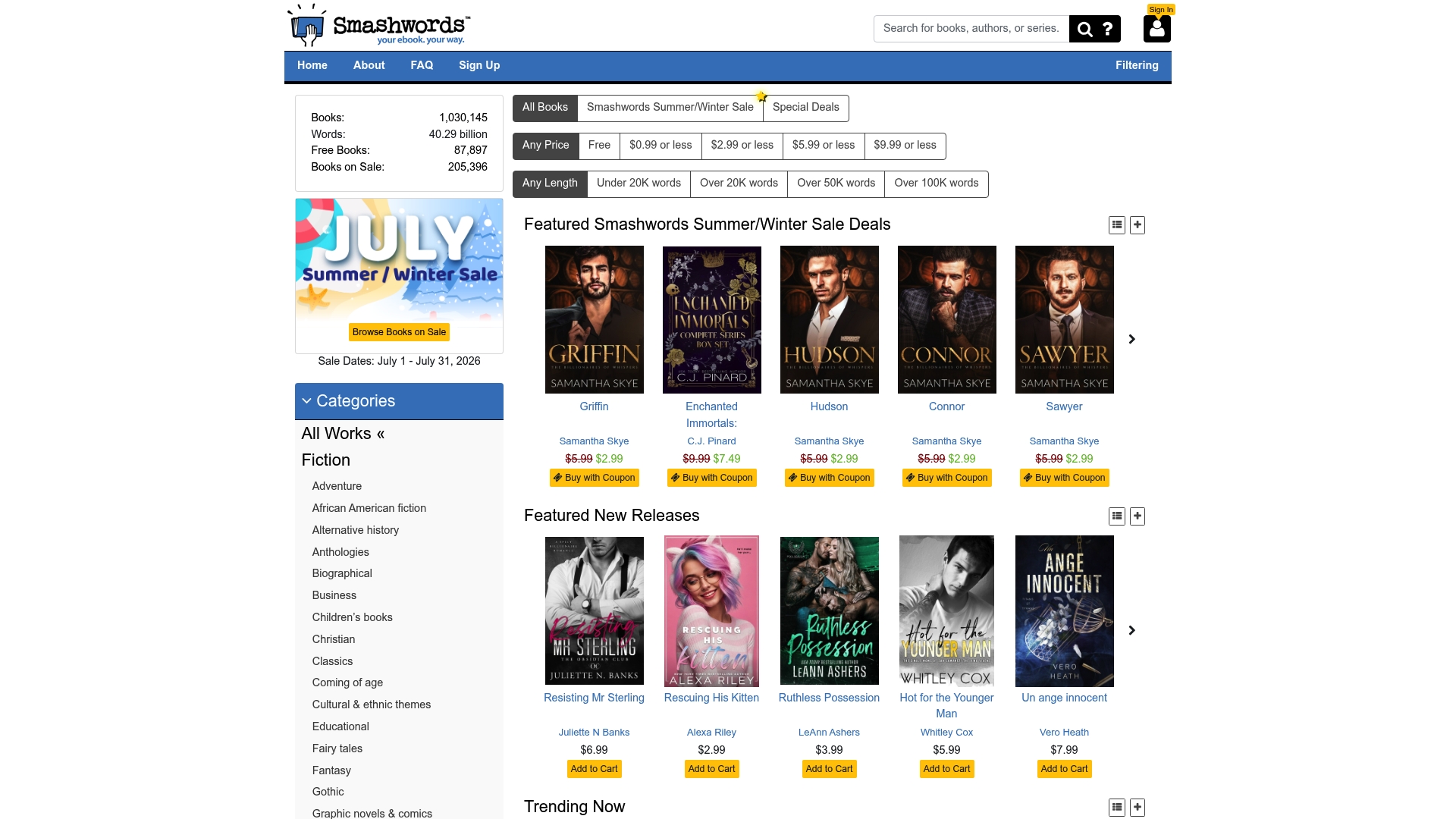
Smashwords’ marketing materials state authors can earn up to 80% royalties on eligible titles. The site has operated since 2008 and focuses on independently published ebooks across many genres. Its catalog includes fiction, nonfiction, poetry, and plays and appeals to readers seeking niche and indie work.
Core Features
Smashwords combines an author-facing distribution network with direct sales through its own store and partnerships that extend reach. Authors control pricing, metadata, and promotional activity and can run coupons and sales campaigns to boost visibility. The platform also links distribution to Draft2Digital to reach additional retailers and libraries.
Key Differentiator
Smashwords centers on high author revenue and a nonexclusive model that leaves creators free to sell elsewhere. That royalty claim and the platform’s built-in promotional toolkit give indie authors close control over pricing and marketing. The Draft2Digital relationship expands retail and library placement beyond Smashwords’ storefront.
Pros
Smashwords has a long track record in independent publishing, which supports author credibility and reader discovery. The platform gives authors direct control over pricing and metadata, and the promotional tools can raise visibility during targeted sales events. High author compensation and wide distribution options support small publishers and self-publishing authors who want control and flexibility.
Cons
- The file creation and upload process can feel complex for authors who lack ebook formatting experience. This often requires extra time or third-party formatting help.
- Review procedures are sometimes strict and inconsistent, causing delays or rejections that frustrate authors submitting work. Moderation can take longer than some expect.
- Post-merger account management problems have caused confusion for some authors, including permission and distribution settings discrepancies. Support response varies by case.
- Several authors report slow or clunky payout workflows. That complaint affects cash flow for creators who rely on faster payments.
When It May Not Fit
Authors who are new to ebook formatting will face a steep learning curve on Smashwords and may prefer a service that handles conversions. Readers outside supported regions or those without compatible reading devices could see limited access to some distributed titles. Authors needing fast, predictable payouts should plan for slower payment cycles.
Who It’s For
Indie authors and small publishers who want flexible, high-royalty distribution benefit most from Smashwords. The platform suits creators who prefer direct control of pricing, metadata, and promotions rather than exclusive deals. It also fits readers seeking a broad selection of independent and niche titles.
Real World Use Case
An independent author uploads a manuscript, uses Smashwords’ coupon tools to run a weeklong sale, and adjusts metadata to improve discoverability. They use the Draft2Digital connection to place the same title with multiple retailers and libraries. Sales and reader feedback inform follow-up promotions and pricing adjustments.
Pricing
Smashwords allows authors to list titles at no cost and charges nothing to maintain a catalog. Distribution through Draft2Digital follows standard commission structures that apply when retailers pay out. Customers buy individual ebooks with frequent discounts and sale events, and some premium promotional features may carry fees.
Website: https://smashwords.com
MyBookCave
At a Glance
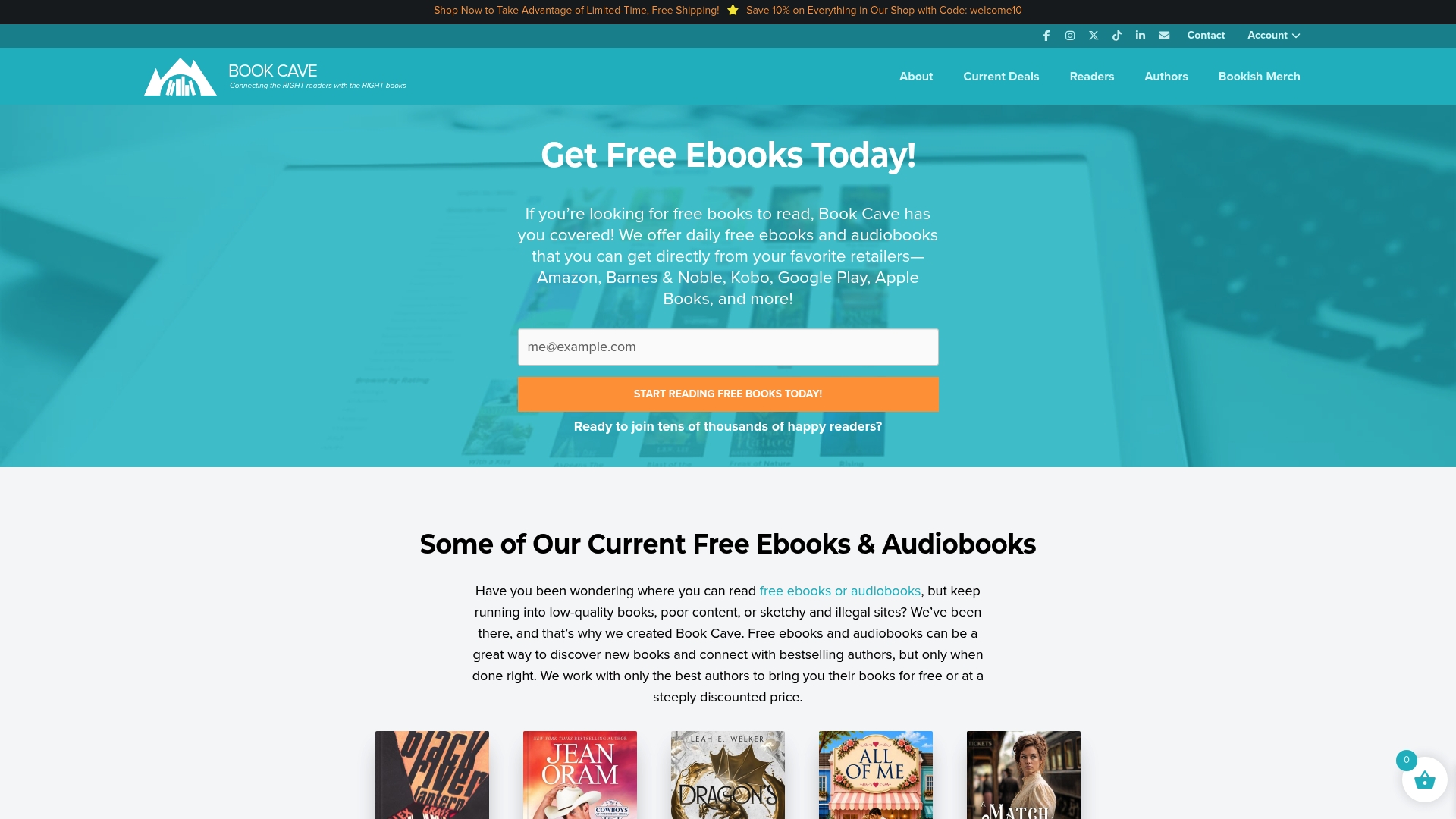
Distributes ARCs and runs retailer feature promotions across Amazon Kindle, Apple Books, and Google Play to seed early reviews. The site pairs those promotions with personalized emails that match readers by heat level and genre. A lively community of reviewers and author pages helps books gain visibility beyond paid blasts.
Core Features
MyBookCave bundles author marketing tools with reader discovery features. Authors can buy author retailer feature promotions, run magnet giveaways, and use ARC distribution to recruit advance readers. Readers receive personalized recommendation emails and join community review threads that drive ratings and word of mouth across multiple retail channels.
Key Differentiator
MyBookCave centers its value on multiple vendor integration plus curated reader matching. That mix lets authors target the right storefronts while sending heat level specific recommendations to engaged readers. The combined promotional and community tools make targeted launches simpler than using isolated advertising channels.
Pros
The platform offers focused promotional mechanics that match authors with readers who actually want early access. Authors report improved downloads and review volume when promotions fit genre and timing. The email system increases open rates because recipients choose heat levels and genres. Community reviews and active author pages sustain visibility after the campaign ends. Wide retail coverage lets readers grab free and discounted ebooks without hopping between many sites.
Cons
- Results vary widely by genre, timing, and how the campaign is run. This variability can make outcomes unpredictable for first time promoters.
- Costs rise as authors scale promotions, which may limit smaller authors on tight budgets.
- Promotional effectiveness sometimes requires experienced management to get the timing, copy, and offer right.
When It May Not Fit
MyBookCave focuses on digital books, so print book promotion receives little support. If your title relies on bookstore events or physical distribution, this platform will not help with that part of the launch. Campaign predictability suffers for niche genres and off season releases, so publishers who need precise scheduling may find the platform a poor match. Large publishers running high volume national campaigns may need a different channel for broad discovery.
Who It’s For
Indie authors and small publishers seeking tactical, storefront targeted promotions will find the platform useful. Voracious readers who want curated free and discounted ebooks and tailored recommendation emails also gain value. Authors who can budget for occasional paid campaigns and manage email and community follow up will see the most benefit.
Real World Use Case
An indie author submitting a launch file buys a retailer feature promotion and distributes ARCs to reviewers in matching genres. The platform sends targeted recommendation emails to readers who opted into the author’s heat level and genre. After the launch the author collects reviews on MyBookCave and continues outreach through community threads.
Pricing
Pricing varies by campaign type and scope. Author retailer feature promotions are typically charged per campaign, with package discounts for multiple books. Community access, reviews, and reader features are free for readers while promotional services range from modest fees to larger investments depending on reach.
Website: https://mybookcave.com
paywhatyouwant.io
At a Glance
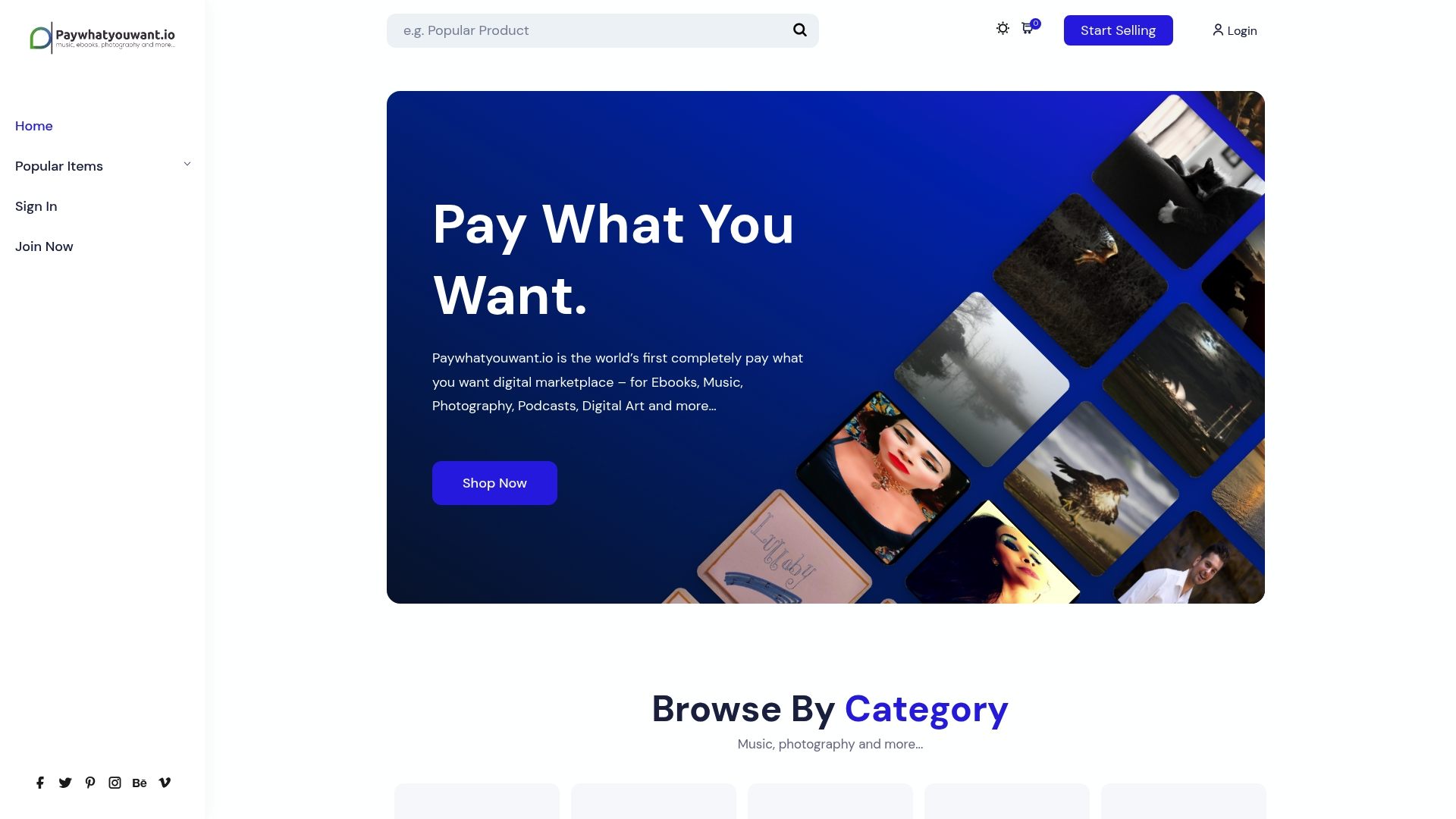
Every item on the site lets buyers choose their price, including free. That open pricing creates a low barrier for discovery and allows niche creators to reach listeners and readers without a fixed storefront fee. paywhatyouwant.io positions that approach as its core identity and attracts a broad mix of independent artists and hobbyist creators.
Core Features
The marketplace uses a pay what you want pricing model for all digital content and organizes material across ebooks, music, photography, digital art, and podcasts. Registered accounts let people save wishlists, track downloads, and return to items they supported. The platform highlights community contributions and exposes basic sales and rating information so creators and buyers can make informed decisions.
Key Differentiator
The platform sells every item under the pay what you want model so price becomes a community decision rather than a fixed retail tag. That model encourages occasional free access while preserving an option for voluntary support. For creators who want visibility and direct patronage, that pricing structure is the defining feature.
Pros
The marketplace supports independent creators by removing mandatory pricing and letting artists set suggested amounts or offer content for free, which helps new work get discovered. Its category breadth means a reader can find an ebook next to a short music EP or a photo pack, so you can explore multiple media types in one place. Community signals such as ratings and visible sales data give buyers context about quality and popularity, and account features simplify repeat downloads and wishlist tracking.
Cons
-
Content licensing details may be incomplete for some items, which complicates commercial reuse decisions.
-
Quality varies because anyone can submit material; some files will be amateur and others polished.
-
Allowing buyers to set prices may limit steady income for creators who need predictable revenue.
-
The large, mixed catalog can make finding highly curated or consistently professional offerings slower.
When It May Not Fit
If you need clear commercial licenses for redistribution, this marketplace can introduce extra administrative work. Creators who rely on fixed pricing and predictable royalties will likely find the revenue model risky. If you want a tightly curated library with uniform quality, this site may feel too open and varied.
Who It’s For
This site fits digital content enthusiasts who favor flexible pricing and direct support for creators. It also suits independent authors, musicians, and visual artists who prioritize exposure and community backing over fixed storefront revenue. Educators and researchers seeking open access materials will find useful items among the free contributions.
Real World Use Case
A small independent musician uploads an album and suggests a modest price while allowing free downloads. Fans preview tracks, pay different amounts based on appreciation, and share links that drive more downloads. The artist gains exposure and voluntary contributions while building a base of listeners without a traditional label or distributor.
Pricing
Most items are priced by each creator, so there are no storewide fixed prices. Many works are free or listed at a minimal suggested amount, while some premium items are priced between $2 and $99. Buyers choose what to pay at checkout unless the creator sets a mandatory minimum.
Website: https://paywhatyouwant.io
Comparing Downloadable eBook Retail Platforms
Selecting the ideal digital eBook platform involves comparing factors like pricing, catalog focus, and format support among top options.
| Product | Core Feature | Key Differentiator | Pricing | Notable Limitation |
|---|---|---|---|---|
| Ebook-warehouse | PDF format, instant download | Curated professional and learning eBooks | $5–$6 per title | Limited to PDF format |
| ebooks.com | Broad catalog, multiple formats | Independent retailer with discounts | $1.99–$60 per title | Relies on proprietary reading application |
| Smashwords | Indie eBook distribution | High royalty support for authors | Price not published | Complex setup for new authors |
| MyBookCave | Promotional eBook distribution | Genre/heat-level-targeting for authors | Price not published | Unpredictable outcomes for some promotion styles |
| paywhatyouwant.io | User-selected pricing for all content | Flexible, community-driven payments | Price not published | Varied quality and licensing details |
What Challenges Do Readers Face When Searching for Kindle Alternatives?
Choosing the right alternative marketplace can be confusing for entrepreneurs, small business owners, bloggers, students, and lifelong learners. Many platforms require specific reading devices or apps, complicate file compatibility, or delay access after purchase. Ebook-warehouse solves these problems by offering instant PDF downloads for each purchase, letting readers access practical business, cooking, and personal development resources without hassle. The catalog focuses on relevant, targeted titles, cutting time spent hunting for useful material.
Get immediate access to affordable, business-focused eBooks with Ebook-warehouse and begin applying new ideas within hours. See how easy it is to find and download useful guides by visiting Ebook-warehouse today.
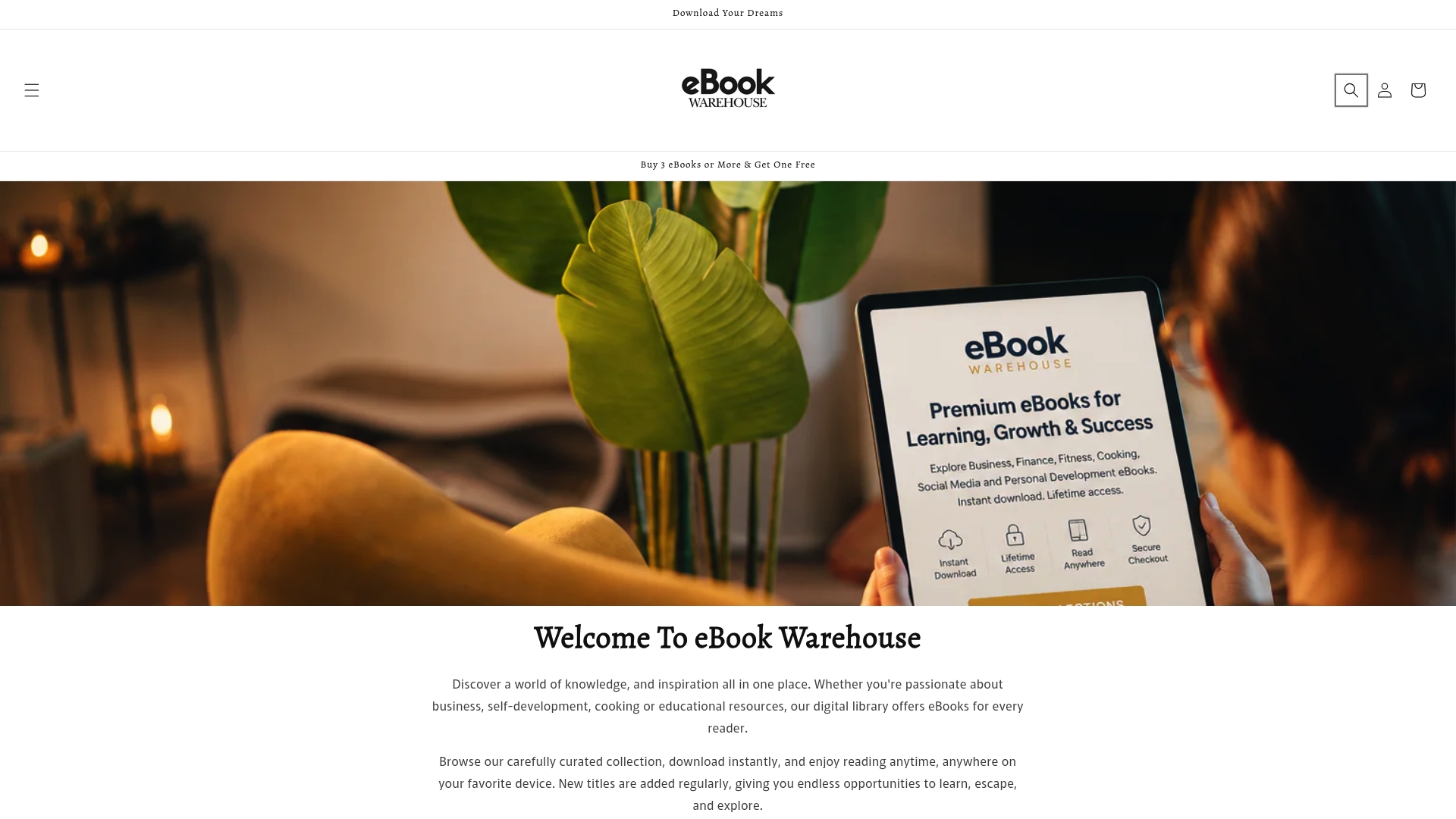
Find valuable titles designed for active learners at Ebook-warehouse. Benefit from quick checkout and bundle discounts that make getting multiple practical books easy and cost-effective. Take charge of your learning by securing instant PDFs that fit your tablet or laptop and start improving your skills right away.
FAQ
What are the pricing details for Ebook-warehouse?
Ebook-warehouse offers most eBooks in the range of $5.00–$6.00 USD. This predictable price band allows readers to know what to expect and helps in budgeting for educational materials.
How does Ebook-warehouse compare to ebooks.com in terms of content types?
Ebooks.com has a broad catalog that spans fiction, textbooks, and niche nonfiction, making it appealing for a variety of readers. Ebook-warehouse focuses specifically on business, self-development, cooking, social media, and education, which provides targeted resources for learners and professionals.
What payment methods can I use on Ebook-warehouse?
The platform supports multiple payment options including PayPal, credit cards, and digital wallets. This flexibility offers convenience for users when purchasing eBooks, allowing for a seamless checkout experience.
Does Ebook-warehouse require a subscription for purchasing eBooks?
Ebook-warehouse does not have subscription plans; each title is purchased individually. This model allows customers to buy only what they want without any ongoing commitment.
Can I find special promotions on Ebook-warehouse?
Yes, Ebook-warehouse runs bundle promotions such as buy 3, get 1 free, which provides additional savings for buyers interested in multiple titles. Regular updates and promotional deals help keep costs low for all readers.