

Learning Science Ebooks: Research-Backed PDFs to Use Now
Start with two PDFs: the Dunlosky et al. (2013) review and Make It Stick. Together they cover the two learning strategies with the strongest evidence behind them: retrieval practice and spaced practice. Everything else in the learning science ebooks space is commentary on those two ideas.
Quick-download options to grab today:
- The Dunlosky et al. (2013) review PDF — free, dense, and the closest thing to a primary source you’ll find on this topic.
- Make It Stick — the most readable translation of that research into everyday habits.
- A practical how-to guide (see the reading list below) if you want exercises instead of theory.
Your one action: download the Dunlosky PDF or Make It Stick, then schedule a 10-minute self-testing session within the next 24 hours. That’s the whole system, in miniature.
Key Takeaways
Retrieval practice and spaced review are the two study strategies with the strongest research support, and pairing them with the right ebooks turns that research into a habit.
| Point | Details |
|---|---|
| Start with two sources | Download the Dunlosky et al. (2013) PDF and Make It Stick before buying anything else. |
| Prioritize retrieval and spacing | These are the two highest-utility strategies identified across major reviews of study techniques. |
| Skip rereading and highlighting | Both rated low utility despite being the most common study habits. |
| Follow a review schedule | Space reviews at roughly 1 and 3 days to counter the forgetting curve. |
| Buy from Ebook-warehouse | Ebook-warehouse curates evidence-based PDFs like its Mind & Memory Mastery collection for instant, multi-device access. |
Table of Contents
- What the Research Says About Effective Learning Strategies
- How Do You Choose a Trustworthy Learning-Science Ebook?
- Which Learning-Science Ebooks Should You Read First?
- Building a 4-Week Learning Routine From These Ebooks
- How Do You Download and Read These PDFs Safely?
- Why Ebook Warehouse Curates for Evidence, Not Hype
- Get Research-Backed Study PDFs You Can Start Tonight
- Frequently Asked Questions
- Sources
What the Research Says About Effective Learning Strategies
Researchers Dunlosky, Roediger, and colleagues ran the most influential review of study techniques and found that most popular habits barely work. Their 2013 analysis rated ten common learning strategies and landed on two clear winners: retrieval practice (testing yourself on material) and distributed practice (spacing study sessions out over time). Both received the highest utility rating the review handed out.
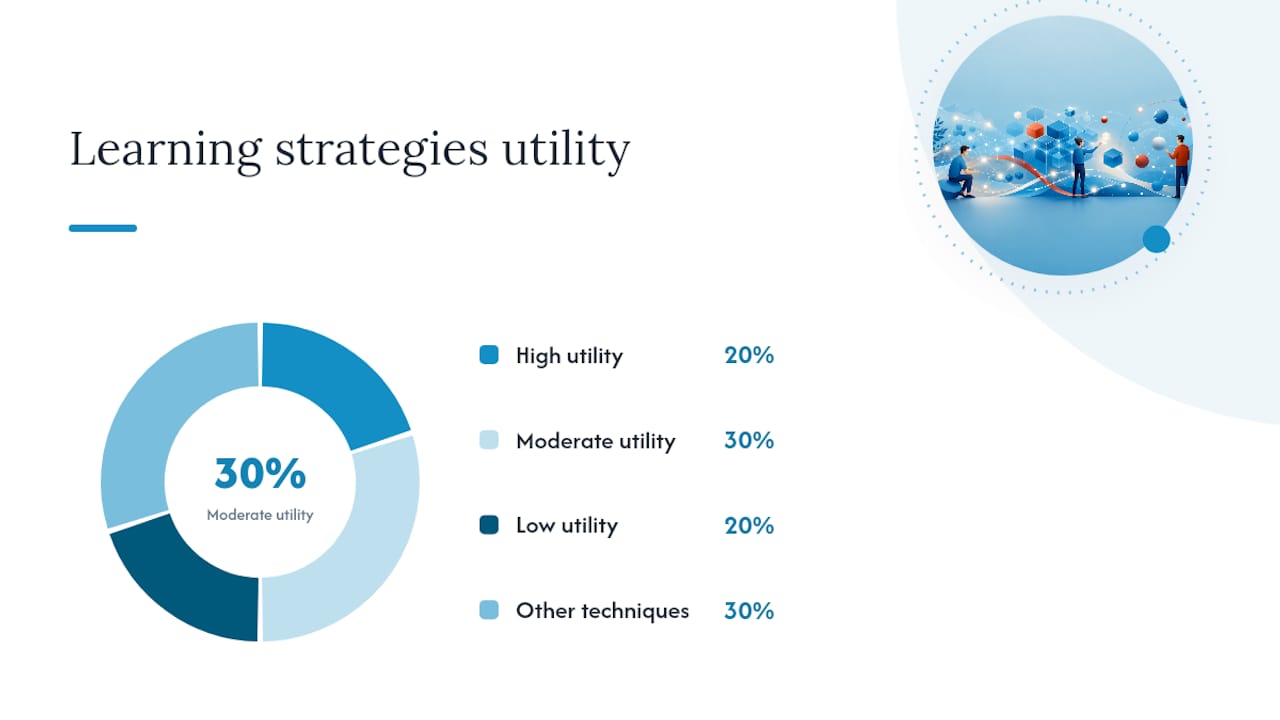
Rereading and highlighting, the two habits most students default to, rated low utility. They feel productive because the material looks familiar on a second pass. That familiarity is an illusion, not evidence of learning.
A few other strategies earned a “moderate” grade and are worth layering in once retrieval and spacing are routine:
- Interleaving — mixing problem types or topics within a single session instead of blocking them.
- Elaborative interrogation — asking yourself “why is this true?” for each new fact.
- Self-explanation — narrating your own reasoning as you work through a problem.
The in-depth follow-up review of these same ten techniques adds an important nuance: generalizability varies by task and learner. Retrieval practice holds up across nearly every subject and age group tested, which is rare in cognitive science and part of why it anchors this whole field.
Here’s the part that trips people up: the strategies that work best usually feel worse while you’re doing them. Struggling to recall a fact from memory is uncomfortable in a way that rereading a highlighted paragraph is not. Cognitive scientists call this the performance-learning gap. What feels like progress in the moment (smooth, fluent rereading) often produces weak long-term retention, while what feels like failure (straining to recall, getting answers wrong on a practice quiz) tends to build the stronger memory trace.
Pro Tip: Skip flashcard apps for your first week and try free recall instead: close the book, grab a blank page, and write down everything you remember about the chapter before checking your notes. It’s harder than flashcards and that difficulty is the point.
How Do You Choose a Trustworthy Learning-Science Ebook?
Not every PDF claiming to be “backed by science” actually is. Run any title through this checklist before you download or pay for it:
- Check the author’s credentials. Look for a researcher, cognitive scientist, or educator with a publication history, not just a personal-development blogger.
- Confirm the publisher. University presses and established academic publishers (Harvard University Press, for instance) apply editorial scrutiny that self-published titles skip.
- Look for citations. A credible ebook references actual studies, not vague phrases like “research shows.”
- Look for exercises, not just theory. The APA’s study guidance works because it pairs findings with concrete practice formats like quizzes and flashcards.
- Preview a sample chapter before buying to confirm the tone and depth match your level.
- Check file format and DRM notes so you know it will actually open on your device.
Most practical learning-science ebooks run in the $10 to $25 range, and academic PDFs like Dunlosky’s are free. Give yourself several weeks of consistent practice before expecting a noticeable jump in recall or test performance. If a PDF makes big promises but skips citations entirely, that’s a signal to skip it.
Which Learning-Science Ebooks Should You Read First?
This short list covers the range from primary research to street-level practice, and each one earns its spot for a different reason.
- Make It Stick by Peter C. Brown, Henry L. Roediger III, and Mark A. McDaniel. Published by Harvard University Press, this is the most cited popular synthesis of retrieval and spacing research, built on case studies across professions from medicine to aviation. Read it first if you want the “why” explained through stories rather than data tables.
- Improving Students’ Learning With Effective Learning Techniques by Dunlosky et al. (2013). This is the source PDF behind most modern study advice, including the advice in this article. Use it as a reference checklist against any new study tip you encounter.
- A Mind for Numbers by Barbara Oakley. Best for readers who feel like they’re “not a math person” and want a science-grounded way to rebuild confidence in technical subjects.
- Small Teaching by James M. Lang. Written for educators, but its short, low-effort techniques (like opening a session with a retrieval quiz) translate directly to solo learners building their own routine.
- The Art of Learning by Josh Waitzkin. A memoir from a chess prodigy turned martial artist, best for readers who want a narrative case study in deliberate practice rather than a strategy manual.
Download the Dunlosky PDF first since it’s free and takes twenty minutes to read. Save your money for Make It Stick or A Mind for Numbers once you know which explanatory style suits you. Buy books only through the publisher or a legitimate retailer. Copies of Make It Stick floating around on random file-sharing sites are usually pirated and often missing pages or exercises.
Building a 4-Week Learning Routine From These Ebooks
Reading about retrieval practice and actually doing it are two different skills. Here’s a month-long structure that turns the ebooks above into a habit.
- Week 1: Read and test. Read one chapter of Make It Stick or the Dunlosky PDF’s summary section, then close the book and write down everything you remember (free recall). Schedule your first review at the 24-hour mark, per the spaced-review pattern university learning centers commonly recommend.
- Week 2: Add spacing. Review Week 1’s material again several days after the first review, and then once more about a week after the initial study session. Introduce flashcards or short practice quizzes for material that’s harder to recall from memory alone, following the format the APA recommends.
- Week 3: Interleave. Mix two topics or chapters into the same study session instead of studying them separately. If you’re working through A Mind for Numbers, alternate between two problem types rather than drilling one repeatedly.
- Week 4: Test and log. Push your later review for Week 1 material about three weeks after the initial study session, run a full self-test on everything covered, and check your recall accuracy against your Week 1 results.
Track three numbers in a simple spreadsheet: recall accuracy (percent correct), time to answer, and which topics need another review cycle. That log becomes your evidence for what’s actually sticking.
Pro Tip: Interleaving feels slower and more frustrating than blocked practice, but it’s the combination researchers point to for durable, transferable learning, not speed on day one.

How Do You Download and Read These PDFs Safely?
Buy PDFs only from the publisher’s own site or a reputable retailer, and check the product page for DRM notes before you pay. A quick pre-download checklist:
- Confirm the file is a genuine PDF (not a low-quality scan) and check the listed file size.
- Preview a sample page or chapter when the retailer offers one.
- Skip pirated copies entirely. They’re a common source of malware and usually missing exercises or full chapters.
- For easier reading, look for text-searchable PDFs and reader apps that support adjustable fonts and syncing across your phone, tablet, and computer.
Why Ebook Warehouse Curates for Evidence, Not Hype
We built our personal-development collection around one filter: does the strategy hold up under research, or does it just sound good in an ad? Our emotional intelligence and mindset collections follow the same standard.
Get Research-Backed Study PDFs You Can Start Tonight
Most learning apps sell you streaks and gamified badges instead of a strategy that actually holds up under a memory test. Ebook-warehouse takes the opposite approach: every PDF in our collection is picked for practical value, not marketing polish, and you get instant access across your phone, tablet, or laptop the moment you buy.

If retrieval practice and spaced review are the strategies you want to build a routine around, our Mind & Memory Mastery collection pairs directly with the four-week plan above. Want something broader for turning study habits into daily output? Check our Personal Productivity category, which includes titles built for people balancing self-directed learning with a full schedule. Every product page includes a sample preview, so you can check the writing style and exercise format before you buy. Browse the collection, preview a few sample chapters, and download the PDF that matches the study habit you’re trying to build this month.
Frequently Asked Questions
What are learning science ebooks, exactly? They’re PDFs and digital books that explain the cognitive research behind how memory and skill retention work, then translate it into study techniques you can apply, as opposed to general motivational self-help.
Which learning science ebook should a beginner read first? Start with Make It Stick if you want a narrative, easy-to-follow introduction, or the free Dunlosky et al. (2013) PDF if you prefer the research itself.
How long before I notice a difference from these techniques? Most learners notice better recall within two to four weeks of consistent retrieval practice and spaced review, based on the review cycle researchers recommend.
Do I need special software to read these PDFs? No. Any standard PDF reader on a phone, tablet, or computer works. Look for one that supports text search and annotation if you plan to mark up practice sections.
Is spaced repetition the same as cramming? No. Cramming compresses review into one long session right before a test. Spaced repetition deliberately spreads reviews across days or weeks, which research shows produces stronger long-term retention.
Sources
- Improving Students’ Learning With Effective Learning Techniques: Promising Directions From Cognitive and Educational Psychology (Dunlosky et al., 2013)
- Make It Stick — Harvard University Press
- Six research-tested ways to study better — American Psychological Association (APA)
- Improving Students’ Learning With Effective Learning Techniques (monograph / in-depth review)
- Adding spaced repetition to your study toolkit — Thrive, University of Arizona