

DRM in Ebooks Explained: What Readers Need to Know
Digital rights management in ebooks is defined as a system that encrypts ebook files and controls how readers access, copy, share, and use digital content to enforce copyright and license terms. DRM ties each file to a specific user account or device, making the ebook readable only under conditions set by the publisher or platform. The four major DRM schemes in use today are Adobe ADEPT, Amazon’s proprietary DRM, Apple FairPlay, and the Marlin DRM standard. Understanding how these systems work, and where they fall short, helps readers and publishing professionals make better decisions about the ebooks they buy, sell, or distribute.
What are the major DRM systems used in ebooks?
The four primary DRM schemes for ebooks are Adobe ADEPT, Amazon’s proprietary DRM, Apple FairPlay, and Marlin DRM. Each system ties content to specific user accounts, device serial numbers, or session tokens to enforce access rules.
Adobe ADEPT is the most widely used open-ecosystem DRM. It protects EPUB and PDF files and requires readers to authorize their device through an Adobe ID. Libraries using platforms like OverDrive rely on Adobe ADEPT to issue time-locked loans.
Amazon’s proprietary DRM locks Kindle files (AZW3 format) to a reader’s Amazon account. A reader can access the same book across multiple registered Kindle devices, but the file cannot leave the Amazon ecosystem. This is the most common DRM scheme for retail ebook buyers in the United States.

Apple FairPlay protects ebooks sold through Apple Books. It uses AES encryption and ties files to an Apple ID, limiting access to Apple devices and apps. Marlin DRM, less visible to consumers, is used primarily in enterprise and educational publishing platforms.
All four systems share a common technical foundation: file encryption, license issuance, device fingerprinting, and real-time license validation to maintain access controls. When a license expires or a device is deauthorized, access stops immediately.
Pro Tip: Before buying an ebook, check which DRM scheme the platform uses. If you read across multiple devices or ecosystems, Adobe ADEPT titles offer the widest compatibility among DRM-protected formats.
How does DRM affect ebook compatibility and sharing?
DRM creates hard walls between reading ecosystems. A Kindle title cannot be read on a Kobo device, and an Apple Books purchase cannot be opened in a generic EPUB reader. This is the most common frustration readers report with digital books.
DRM-protected ebooks cannot be converted by tools like Calibre because encryption blocks access to the underlying file data. Attempting to convert a DRM-locked AZW3, EPUB, or PDF file fails at the binary level. The tool simply cannot read the encrypted content.
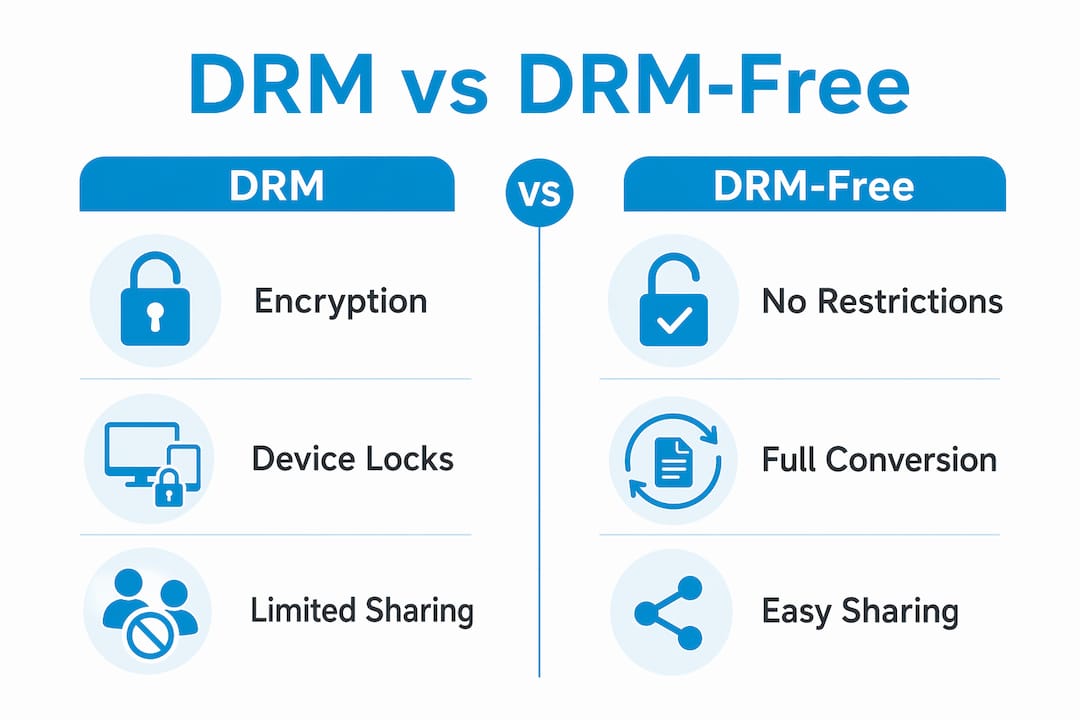
Sharing is equally restricted. DRM-protected titles cannot be copied to a friend’s device, backed up to a personal server, or transferred to a new account if a platform shuts down. These restrictions apply even when the reader paid full retail price.
Library lending adds another layer of complexity. Loan durations are typically 1, 7, or 21 days, with offline downloads locking licenses for the full term. When the loan expires, the file becomes unreadable automatically, even if it is still stored on the device.
The practical effects on readers include:
- No cross-platform transfers. A Kindle purchase stays in the Kindle ecosystem permanently.
- No permanent backups. DRM files cannot be archived independently of the platform.
- No format conversion. Locked files cannot be converted to a preferred format like plain EPUB or PDF.
- No gifting or resale. DRM ebooks cannot be transferred to another person’s account.
- Time-limited library access. OverDrive uses Adobe ADEPT with time-locked licenses that expire automatically at loan end.
By contrast, DRM-free ebooks allow full format conversion and device transfer, representing true file ownership. Many indie authors and publishers offer DRM-free versions to promote accessibility and reader goodwill. Readers who value flexibility should look for titles explicitly labeled “DRM-free” before purchasing. Ebook-warehouse provides clear usage information with its titles so readers know exactly what they are getting.
What are the benefits and downsides of DRM for publishers and readers?
DRM offers real benefits for publishers, but those benefits come with costs that fall directly on readers. Understanding both sides helps authors and publishers make a genuinely informed choice.
Benefits of DRM for publishers
- Copyright protection. DRM prevents casual copying and redistribution, protecting revenue from unauthorized sharing.
- Regulatory compliance. DRM is legally required in some cases to comply with data protection laws like GDPR, SOX, and FERPA. Encryption and license enforcement give regulators verifiable access records.
- Controlled distribution. Publishers can limit how many devices access a title simultaneously, supporting institutional licensing models.
- Revocable access. Platforms can revoke access to recalled or updated titles without physical recalls.
Downsides of DRM for readers
- Reader friction. Authorizing devices, managing Adobe IDs, and dealing with expired licenses creates friction that legitimate buyers should not face.
- Limited device flexibility. Readers who switch platforms lose access to their purchased libraries.
- Access failure risk. Platforms that handle revocation poorly create support burdens and frustrate readers who did nothing wrong.
- Educational barriers. Academic libraries favor DRM-free ebooks for their greater usability in education settings, though many publisher agreements still require DRM.
Social DRM offers a middle path. Publishers using social DRM watermark ebooks with buyer-specific information to deter unauthorized sharing without restricting usability or compatibility. If a file leaks, the watermark identifies the source. This approach lets readers read freely on any device while still giving publishers a deterrence and tracing mechanism.
Pro Tip: If you are a publisher weighing DRM options, social DRM (watermarking) gives you traceability without the compatibility headaches of hard encryption. It works especially well for niche or professional titles where your audience is unlikely to pirate intentionally.
How should authors and publishers decide whether to apply DRM?
DRM is a strategic choice that reflects audience needs and distribution model, not a default setting to accept without thought. The right answer depends on what you are trying to protect and who your readers are.
Ask these questions before enabling DRM on any title:
- What is your primary goal? Preventing casual sharing is different from stopping organized piracy. DRM addresses the first; it rarely stops the second.
- Who is your audience? Technical readers and professionals are more likely to be frustrated by DRM restrictions. General consumers may not notice.
- Where are you selling? Retail-first distribution through major platforms means DRM is often applied by default. Direct-to-reader sales give you full control over the choice.
- What does your genre expect? Romance and genre fiction readers often share recommendations and files casually. Academic and professional readers expect clean, transferable files.
- Have you reviewed your DRM policy recently? DRM may reduce casual sharing but often frustrates legitimate readers wanting device flexibility or archive access. A policy set three years ago may not reflect your current audience.
Communicating DRM status clearly to readers builds trust. If a title is DRM-protected, say so on the product page. If it is DRM-free, say that too. Readers who feel deceived by unexpected restrictions leave negative reviews and do not return. Transparency costs nothing and protects your reputation. For authors exploring alternative ebook marketplaces, DRM policies vary significantly across platforms, and knowing those differences before you publish saves time and reader complaints later.
Key Takeaways
DRM in ebooks is a licensing and encryption system that protects copyright but consistently trades reader convenience for publisher control, making the choice of whether to apply it one of the most consequential decisions in digital publishing.
| Point | Details |
|---|---|
| Four major DRM schemes | Adobe ADEPT, Amazon DRM, Apple FairPlay, and Marlin DRM each lock content to specific accounts or devices. |
| Format conversion is blocked | DRM encryption prevents tools like Calibre from converting locked AZW3, EPUB, or PDF files. |
| Library loans are time-limited | Loan periods of 1, 7, or 21 days are enforced automatically; files become unreadable when the license expires. |
| Social DRM is a practical middle ground | Watermarking deters sharing and enables tracing without restricting how or where readers open their files. |
| DRM is a strategic decision | Authors and publishers should evaluate audience, distribution channel, and goals before applying DRM to any title. |
The uncomfortable truth about DRM and piracy
I have spent years watching publishers treat DRM as a security guarantee. It is not. Determined piracy is rarely stopped by DRM alone. What DRM actually does is enforce license terms and limit casual sharing among people who were never going to pirate in the first place.
The readers most affected by DRM restrictions are your best customers. They buy legitimately, they read across devices, and they get locked out when a platform changes its authorization rules or shuts down entirely. That is a real cost, and publishers rarely account for it when they tick the “enable DRM” box by default.
The most effective protection I have seen is a combination of social DRM, transparent usage policies, and a genuinely good reader experience. When readers feel respected, they do not share files out of spite. When they feel trapped, they look for workarounds. The publishing industry’s obsession with hard encryption has cost it more in reader trust than it has ever recovered in prevented piracy.
My honest recommendation: use social DRM for most titles, reserve hard DRM for institutional licensing where compliance requires it, and tell your readers exactly what they are buying. That combination protects your rights without punishing the people paying your bills.
— Stephen
Ebook-warehouse and your digital reading experience
Readers who want to build a real library without compatibility headaches deserve to know exactly what they are purchasing. Ebook-warehouse curates a collection of downloadable titles across personal development, business, cooking, and online education, with clear usage information on every product page.
Whether you are looking to maximize your publishing earnings or simply find titles you can read across your devices without friction, Ebook-warehouse makes the terms clear upfront. The catalog covers niche subjects that larger platforms overlook, and every purchase delivers instant access. For readers who want affordable digital books without the guesswork of opaque licensing, the Ebook-warehouse collection is a practical starting point.
FAQ
What does DRM mean in ebooks?
DRM stands for Digital Rights Management. It is a system that encrypts ebook files and ties access to specific user accounts or devices, controlling how readers use, share, and copy digital content.
What is DRM-free ebook meaning?
A DRM-free ebook contains no encryption or license restrictions. Readers can convert it to any format, store it on any device, and back it up independently, representing full file ownership after purchase.
Can I convert a DRM-protected ebook to another format?
No. DRM encryption blocks format conversion tools like Calibre from reading the file data. Conversion only works on DRM-free files.
Does DRM actually stop piracy?
DRM limits casual sharing but does not stop determined piracy. Most users experience DRM as friction rather than a secure lock, meaning it primarily affects legitimate buyers rather than bad actors.
What is social DRM and how is it different from standard DRM?
Social DRM embeds buyer-specific watermarks in ebook files instead of encrypting them. It allows readers to use files freely on any device while giving publishers a way to trace the source if a file is shared without permission.