

Build Your Brand in 90 Days With Personal Branding Ebooks for Pros
A downloadable ebook with worksheets and templates beats a blog post or a vague “brand yourself” checklist because it forces you to produce something by the end. If you want a starting point today, some online stores carry titles built around exactly that kind of execution, giving you a ready roadmap instead of a blank page.
TL;DR:
- Use ebooks with worksheets and templates to ensure you produce actionable content rather than just consuming theory.
- Choose titles from reputable sources that offer instant downloads compatible with mobile devices, avoiding lengthy gating processes.
- Verify the presence of clear frameworks, channel-specific tactics, measurement plans, and downloadable assets to ensure ebook usefulness.
- Follow a structured 90-day plan involving an audit, content creation, publication, and measurement to turn ebook insights into results.
- Start with titles that directly address your gaps, like monetization or LinkedIn success, and dedicate the first hour to an actionable profile audit.
Table of Contents
- Where to find personal branding ebooks worth downloading
- What separates a useful ebook from a time-waster
- Turning one ebook into a 90-day personal brand plan
- Why eBook Warehouse’s titles hold up against this checklist
- The gap between branding advice and branding execution
- Ready-to-use eBook Warehouse titles to start with
- Sources
Where to find personal branding ebooks worth downloading
Not every source produces the same kind of ebook, and knowing the difference saves you from downloading five guides that all say the same thing about “authenticity” without telling you what to actually type into your LinkedIn headline.
Publisher storefronts curate titles across business and personal development categories, often bundled or discounted, with instant PDF downloads that work across phone, tablet, and laptop. You are not waiting on an email sequence to unlock the good parts.
Agency and consultant landing pages tend to give away short, free guides tied to their paid services. These are often genuinely useful for a single tactic, like a headline formula or a content pillar worksheet, but expect the content to funnel toward a sales call. Gated forms are common here.
Personal-author pages produce the most personality-driven material. Executive branding writers, for instance, often release free ebooks built around self-audit exercises and structured frameworks, such as Cristina Muntean’s guide using her 5Ws+H approach to reclaim professional reputation. Other authors sell paid, template-heavy versions, like Sahil Gandhi’s ebook, aimed at consultants who want swipe files they can copy directly into their own outreach.
Free resource libraries offer volume but inconsistent depth. Some entries are genuinely actionable; others are recycled slide decks with no worksheets at all. Check the sample pages before assuming there is a template inside.
When comparing options, weigh these factors:
- Instant download versus a gated email sequence you have to sit through first.
- PDF formatting that renders cleanly on mobile, not just desktop.
- Whether the “bonus template” mentioned on the landing page is actually included or upsold separately.
- Bundled pricing (buy three, get one free, for example) versus paying full price per title.
What separates a useful ebook from a time-waster
A branding ebook earns your download when it hits five specific marks. Skim the table of contents against this list before you commit fifteen minutes to reading the whole thing.
- A clear value proposition framework. The book should walk you through defining what makes you different, not just tell you that differentiation matters.
- A brand story structure. Look for a repeatable formula, not just examples of other people’s stories.
- Channel-specific playbooks. LinkedIn optimization and blog positioning need different tactics, and a good ebook treats them separately rather than lumping “social media” into one vague chapter.
- Worksheets, templates, and swipe files. Canva’s brand strategy guide makes the same point for visual identity: downloadable templates for positioning and messaging speed up execution far more than theory alone.
- A measurement plan. If the book never mentions tracking impressions or profile views, it is missing half the job.
Trust signals matter too. Check for the author’s actual credentials, a case study or two, and a visible sample chapter rather than a locked preview. Adobe’s brand strategy guidance reinforces this: consistent visual identity and ready-made tools reduce the time between reading and publishing, which is the entire point of buying a guide instead of winging it.
Pro Tip: Before downloading anything, search the ebook’s title plus “sample pages.” If you can’t find a preview anywhere, that’s often a sign the templates promised on the sales page don’t actually exist inside.
Turning one ebook into a 90-day personal brand plan
Most people read a branding ebook, nod along, and do nothing with it. The fix is a short, dated plan that treats the ebook as a workbook, not a novel.
Step 1: Audit (Week 1). Spend one hour listing every profile you have, from LinkedIn to your personal website, and score each one against the value proposition exercise in your ebook.
Step 2: Pick one problem and write three pillar assets (Days 8 to 30). Choose a single niche problem you solve better than most people in your field using proven candidate branding strategies that actually move voters. Use the ebook’s templates to draft three pieces of content around it, such as one LinkedIn article, one short bio rewrite, and one case-study post.
Step 3: Publish and repurpose (Days 31 to 60). Set a posting cadence, even a modest one, and slice each pillar asset into three or four smaller posts. Consistency here matters more than volume.
Step 4: Measure and adjust (Days 61 to 90). Track profile views, post impressions, and inbound messages weekly.
- After about one month, profiles are updated and three pillar assets published.
- After around two months, a consistent posting cadence is established with initial increases in profile views.
- By three months, inbound inquiries or connection requests may be tied directly to your content.
Practitioners who study what actually gets used agree that ebooks people finish and act on are the ones with plug-and-play worksheets, because a blank page kills momentum faster than any lack of motivation does. A resource on LinkedIn success strategies can shorten Step 3 considerably if LinkedIn is your primary channel.
Why eBook Warehouse’s titles hold up against this checklist
eBook Warehouse’s catalog spans business, personal development, and career growth titles, each curated for instant access rather than a drawn-out unlock sequence. That matters against the checklist above: templates and execution-focused chapters only help if you can actually open the file the moment you decide to start.
The titles in this category are built with the same emphasis Canva and Adobe apply to their own brand-strategy resources, pairing frameworks with usable assets rather than theory alone. That includes worksheets for defining a value proposition and channel guidance for platforms like LinkedIn, which lines up with what Anup Sarker’s Entity SEO approach calls owning your “Data Home,” meaning a website and profile presence you control rather than rent from a social platform.
Many files download instantly and read cleanly across phone, tablet, and desktop, so there’s no gap between deciding to work on your brand and actually opening the workbook.
That immediacy is the whole appeal. A guide sitting in your inbox behind a five-day email drip does not help you at 9 p.m. on a Tuesday when you finally have an hour free.
The gap between branding advice and branding execution
Most personal branding content repeats the same three ideas: be authentic, be consistent, and know your niche. None of that is wrong, but it is also not actionable, and readers of good branding ebooks aren’t looking for prophecy. They want to know what to type into the headline field today.
The best resources on this topic treat the reader as someone with forty minutes and a deadline, not someone who wants to meditate on their personal mythology. That means a heavier weight on templates than on inspiration, and a bias toward one narrow niche claim over a broad, safe positioning statement that could describe half your industry.
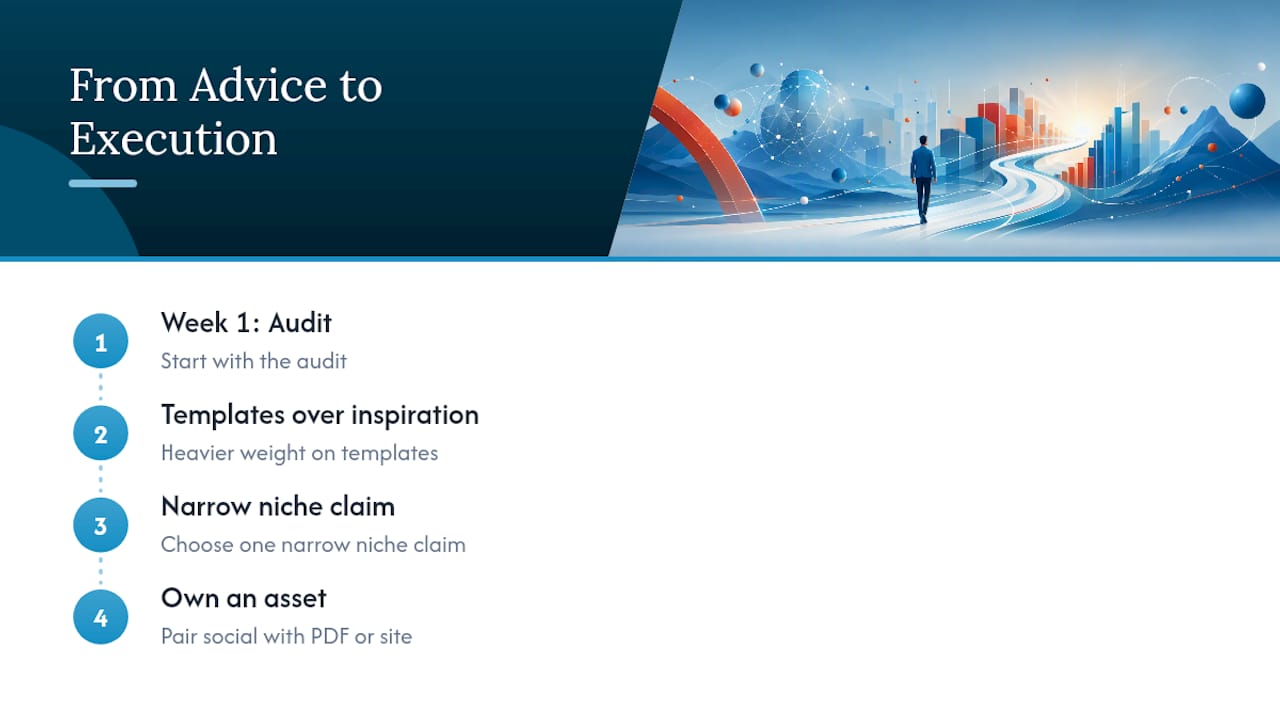
Where the conventional advice really breaks down is the assumption that social platforms alone build durable authority. Posting consistently on LinkedIn helps, but if that’s the only place your expertise lives, you’re renting attention you don’t own. Pairing that activity with something you actually control, like a downloadable PDF or a personal site, is what turns short-term visibility into something that lasts.
Start with the audit in week one. Everything after that is easier once you know what you’re actually working with.
— Stephen
Ready-to-use eBook Warehouse titles to start with
If you want to skip the search and start executing this week, a few titles in the eBook Warehouse catalog map directly onto the checklist above.
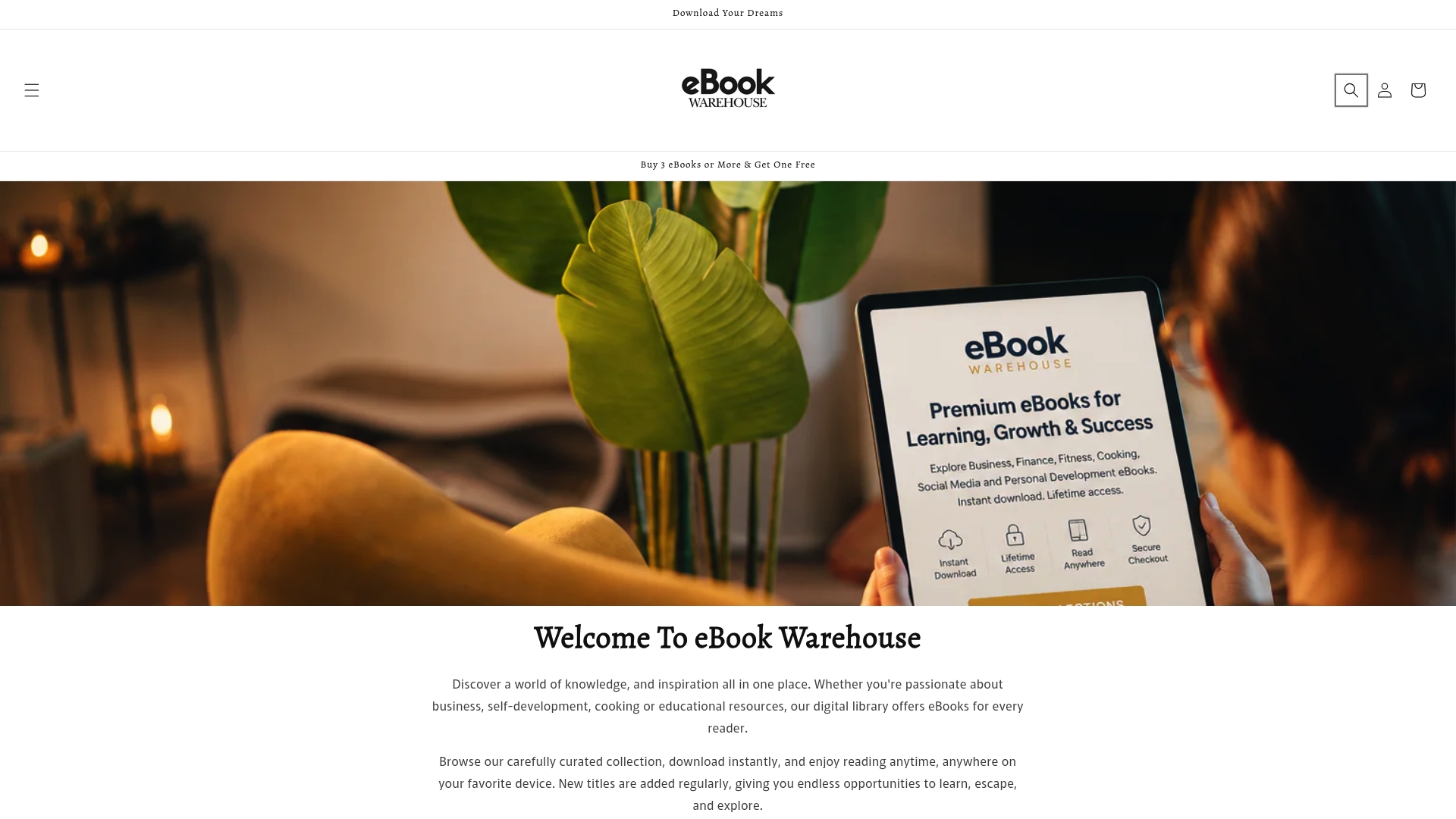
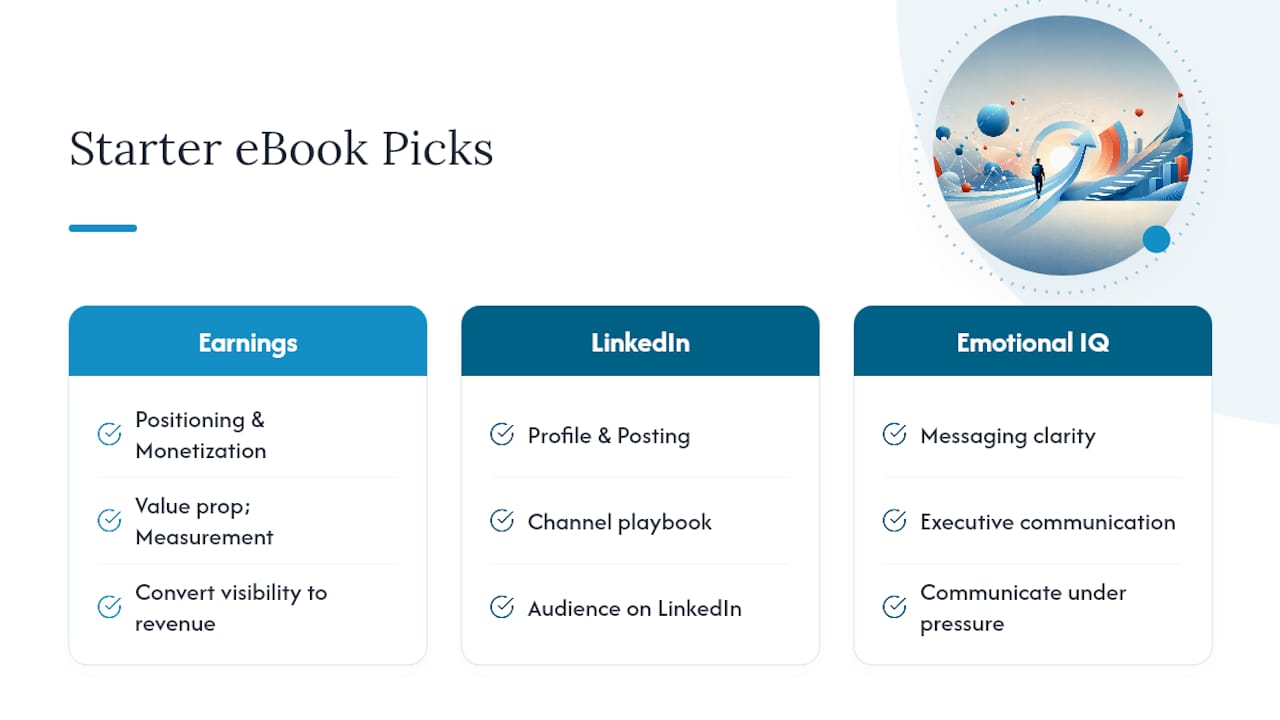
eBook Warehouse Maximise Your Earnings is built for professionals who want to turn expertise into paid opportunities, pairing positioning advice with practical monetization steps. It fits the “value proposition” and “measurement” parts of the checklist directly, since the whole point is converting visibility into revenue rather than just impressions.
eBook Warehouse LinkedIn Success covers the channel-specific playbook most branding guides gloss over, with profile optimization and posting strategy aimed squarely at the platform where most professional audiences already are.
For leaders whose personal brand rests on how they communicate under pressure, Developing Emotional Intelligence rounds out the messaging clarity piece that a lot of branding guides mention but never actually teach.
Pick the title that matches your gap, download it, and block the first hour this week for the audit step. That single hour is the difference between another ebook on your hard drive and an actual 90-day plan in motion.
Sources
- The brand strategy bible: What it is and how to build one — Canva
- The ultimate guide to brand strategy — Adobe Express