

Sales Reps: Templates First Sales Strategy Ebooks in 5 Minutes
Skip the 400-page sales bible for now. Start with a template-first prospecting or cadence playbook, since it hands you a script, a sequence, and a checklist you can run this week instead of theory to absorb over a month. Spotio’s prospecting playbook frames this as an 8-step method built around multi-channel outreach templates. Various online stores stock that kind of template-first sales strategy ebook alongside broader business titles, all in downloadable PDF format for immediate use.
TL;DR:
- Prospecting cadence playbooks with multi-channel templates and KPI frameworks can reduce customer acquisition costs by up to 23 percent.
- Templates, worksheets, and sample chapters in ebooks are more effective than theory alone, especially when directly integrated into CRM systems.
- Successful adoption relies on pilot testing templates with small groups and measuring response and SQL ratios over two to three weeks before scaling up.
- Combining classic frameworks with tactical, channel-specific playbooks accelerates behavior change and improves call quality and discovery conversations.
- Curated collections of sales ebooks, including persuasion, emotional intelligence, and productivity, offer practical tools for immediate application and ongoing development.
Table of Contents
- Curated Picks: The Best Sales Ebook Types To Download Now
- How To Choose The Right Sales Strategy Ebook For Your Role
- How To Turn A Sales Ebook Into A Real Process Change
- Why Template-First Ebooks Outperform Theory-Only Books
- Where Sales Strategy Ebooks Are Headed In 2026
- Comparing The Thought Leaders Behind Sales Strategy Ebooks
- Fitting Ebook Insights Into Your Existing Sales Training
- Real-World Results From Applying Sales Ebook Templates
- Combining Timeless Frameworks With Tactical Ebooks
- Where To Download The Recommended Sales Ebooks
- High-Value Playbooks And Downloads To Read Next
- Sources
Curated Picks: The Best Sales Ebook Types To Download Now
Not every sales strategy ebook earns a spot on your shelf. The ones worth your money give you something to paste into a CRM or a script within the hour, not just a framework to admire. Here’s a working shortlist of ebook types and titles, organized by the problem each one solves.
- Prospecting cadence playbooks. Best for SDRs and BDRs building outbound volume. These include multi-channel outreach templates, email sequences, and call scripts you copy directly into your outreach tool. Most are paid, though several vendor libraries offer free starter versions.
- Sales management ebooks. Best for frontline managers who need coaching frameworks and a KPI dashboard, not another motivational chapter. Look for ones with a scorecard template built in.
- SaaS sales guides. Best for founders and reps selling subscription products where the buying cycle runs on trials and demos rather than RFPs. Close’s SaaS sales resources fall into this category and pair well with a trial-to-close checklist.
- Negotiation ebooks. Best for account executives closing six-figure deals where a bad concession costs real margin. The strongest ones include a concession-tracking worksheet.
- B2B sales process books. Best for anyone mapping a full pipeline from lead to close, especially in complex enterprise cycles with multiple stakeholders.
- Developing Emotional Intelligence, from Ebook Warehouse, fits reps who lose deals on rapport rather than logic. It works less as a script and more as a lens for reading buyer hesitation.
- Savvy Salesmanship: Master the Art of Selling, also from Ebook Warehouse, covers foundational persuasion and closing technique, useful for reps who skipped formal sales training entirely.
- Personal Productivity, from Ebook Warehouse, addresses the unglamorous half of sales performance: how many calls you actually make before lunch.
- Cold email and lead-qualification ebooks. Best for anyone drowning in unqualified leads. Look for a scoring worksheet, not just advice to “qualify harder.”
- Digital sales guides for social selling. Best for reps building pipeline through LinkedIn and content rather than cold calls, a growing share of B2B outreach.
A few of these lean paid, a few have free entry points through vendor resource pages. What separates a useful pick from a shelf filler isn’t price. It’s whether page one gives you a table of contents packed with worksheets or a table of contents packed with chapter titles like “The Mindset of Success.”
How To Choose The Right Sales Strategy Ebook For Your Role
The best sales books for a solo SDR and the best sales management ebooks for a VP of sales are rarely the same title. The B2B Playbook argues that “best” is subjective and depends on your role and how complex your sales cycle actually is, which means the checklist matters more than the bestseller list.
Run through this before buying:
- Role fit. Does the content address your actual daily work, or a generic seller who doesn’t exist?
- Cycle complexity. A two-call transactional sale needs different tactics than a nine-month enterprise deal.
- Included assets. Templates, playbooks, and worksheets beat prose every time.
- Table of contents and sample chapter. If a preview isn’t available, that’s a red flag worth noting.
- Author credentials. Real sales experience or documented results, not just a marketing title.
- CRM compatibility. Can the templates drop into HubSpot, Salesforce, or whatever you already run?
Pro Tip: Open the sample chapter first and look specifically for a worksheet or fillable template. If chapter one is pure narrative with zero tools, the rest of the book probably follows the same pattern.
How To Turn A Sales Ebook Into A Real Process Change
Buying the ebook is the easy part. Turning it into a functioning sales cadence takes five deliberate steps, and most teams skip straight from reading to hoping.
- Diagnose one gap. Pick a single weak point, lead qualification, follow-up timing, objection handling, rather than trying to overhaul everything at once.
- Extract and adapt the template. Pull the cadence, script, or ICP worksheet from the ebook and edit it to match your product and buyer.
- Pilot with one or two reps. Run it for two to three weeks. The B2B Playbook recommends exactly this kind of small-scale test before any full rollout.
- Measure the right numbers. Track response rate and SQL ratio, not just gut feel about whether it “seems to be working.”
- Iterate the template. Adjust based on what the pilot data actually shows, then expand to the full team.
Spotio’s playbook ties this back to hard numbers: implementing structured prospecting templates and a five-KPI tracking framework can cut customer acquisition costs by up to 23%. That’s the difference between an ebook that sits on a shelf and one that changes a quarter’s numbers. A concrete example: swap your current cold-email opener for the ebook’s template, run it against your old version for three weeks, and compare reply rates directly.
Why Template-First Ebooks Outperform Theory-Only Books
Selling Made Simple built its framework from 1,000 interviews, and the result leans on repeatable steps and measurable KPIs rather than motivational anecdotes. That’s the pattern worth noticing: the ebooks that actually change behavior are built like toolkits, not memoirs.
A few reasons this holds up:
- Templates remove the blank-page problem that kills most good intentions after week one.
- Fillable sequences can be pasted straight into outreach tools, which shortens time to first use.
- Curated PDF collections, like the ones Ebook Warehouse organizes across marketing strategy and sales topics, save you the hours of vetting a hundred generic titles.
Treat the ebook as a toolkit, not a textbook. Pair the playbook PDF with a CRM cadence and a short pilot, and the content sticks. Read without that pairing, and most of it evaporates within a week.
Pro Tip: Load the ebook’s cadence steps directly into your CRM’s sequence builder before you finish reading the last chapter. Momentum dies in the gap between closing the PDF and opening the tool.
Where Sales Strategy Ebooks Are Headed In 2026
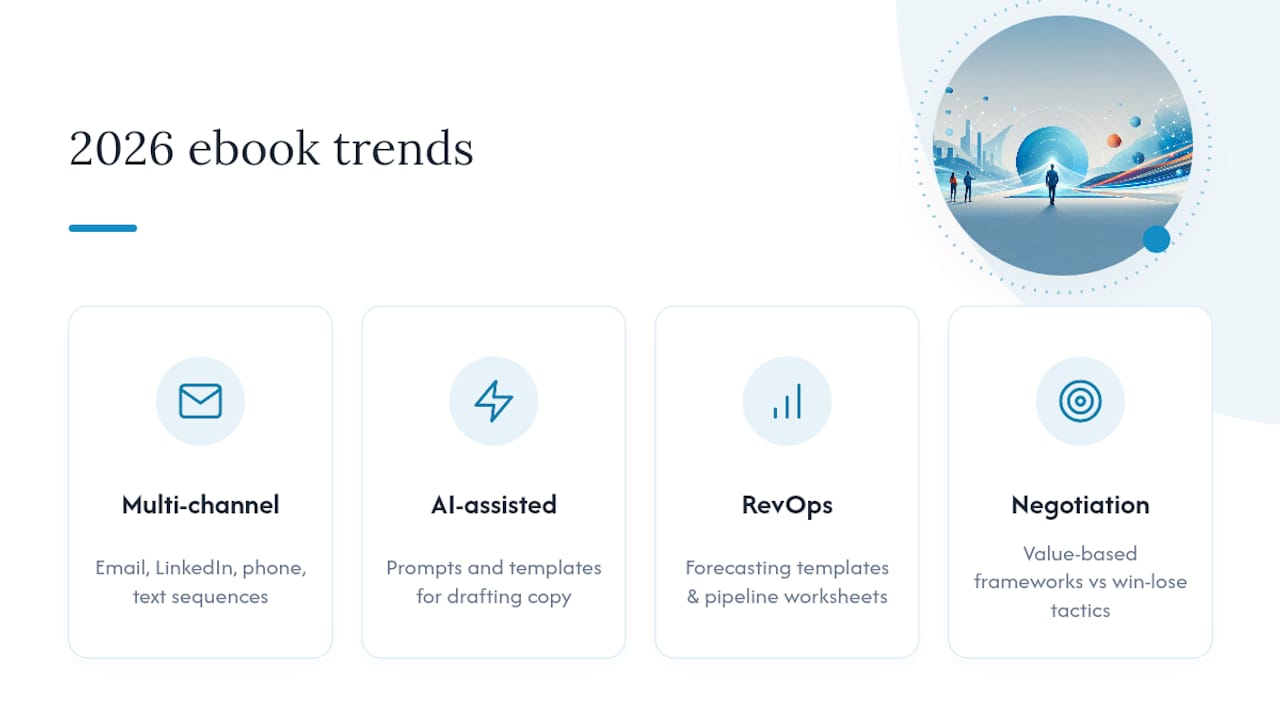
The biggest shift in sales strategy ebooks right now is a move away from single-channel scripts toward multi-channel sequencing: email, LinkedIn, phone, and text woven into one cadence instead of four separate playbooks. Buyers respond to fewer cold calls and more contextual touches, so the strongest recent titles build outreach around signals (a funding round, a job change, a website visit) rather than a fixed weekly schedule.
AI-assisted personalization is the second big trend. Ebooks now routinely include prompts and templates for drafting outreach copy faster, though the credible ones are careful to frame AI as a drafting assistant, not a replacement for a rep who understands the account.
Sales enablement content is also converging with revenue operations. Newer sales management ebooks increasingly include forecasting templates and pipeline health worksheets, treating the sales manager’s job as data interpretation as much as coaching. Meanwhile, negotiation content has shifted from win-lose tactics toward value-based frameworks that hold up better in longer B2B cycles with procurement teams involved.
None of this makes the classics obsolete. It just means a 2026-era sales strategy ebook should show you how a timeless principle, like objection handling or discovery questioning, plays out inside a modern multi-touch, AI-assisted sequence. If a title reads like it was written before video calls existed, that’s worth noticing before you buy it.
Comparing The Thought Leaders Behind Sales Strategy Ebooks
Sales ebook authors tend to split into two camps, and knowing which camp a book comes from tells you what you’re actually buying. One camp writes timeless frameworks: SPIN Selling and Challenger Sale-style methodologies focused on buyer psychology and questioning technique. These hold up across industries because they describe how humans decide, not how a specific tool works.
The other camp writes tactical, current playbooks tied to today’s channels and tools, cadence builders, cold-email specialists, LinkedIn prospecting experts. Multiple curated sales book lists mix both types deliberately, because a rep needs the mindset from one and the mechanics from the other.
Selling Made Simple sits closer to the tactical camp, built on measurable frameworks pulled from real interviews rather than a single author’s personal anecdotes. The B2B Playbook’s own guidance leans practitioner-focused too, explicitly telling readers to modernize classic frameworks for how buyers actually research and purchase now. Neither camp is “better” in the abstract. A first-year AE probably gets more immediate value from a tactical cadence book, while a sales manager coaching a team benefits more from the psychology-first classics that explain why certain questions work.
The honest answer to “who’s the best sales author” is: pick one from each camp. Read the mindset book once, slowly. Read the tactical book like a manual you’ll reopen weekly.
Fitting Ebook Insights Into Your Existing Sales Training
Most sales teams already run some kind of onboarding or coaching program, and the mistake is treating a new ebook as a separate initiative instead of feeding it into what already exists. The fastest integration path is picking one template from the ebook, the cadence, the qualification checklist, the objection script, and slotting it directly into your next scheduled training session rather than launching a standalone “book club.”
Managers get more traction assigning a single chapter with a specific task attached (“read chapter three, then role-play this objection script with your pod”) than assigning the whole book with a vague deadline. Pair that chapter with your CRM: if the ebook’s cadence calls for five touches over 10 days, build that sequence into your sales engagement tool before the training session, not after.
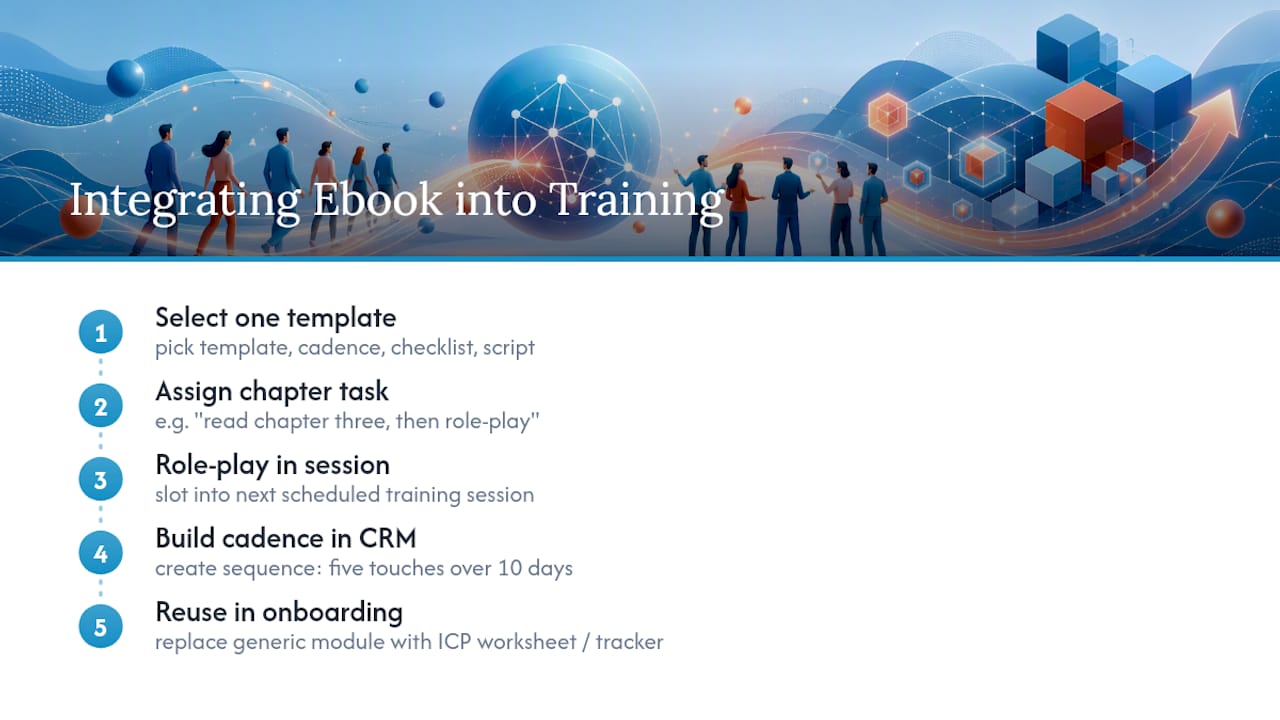
New-hire onboarding is the other natural entry point. A prospecting ebook’s ICP worksheet or a negotiation guide’s concession tracker can replace a generic onboarding module with something reps will actually reuse on live deals. The goal isn’t adding more reading to an already busy ramp period. It’s replacing a weaker internal document with a sharper external one.
Real-World Results From Applying Sales Ebook Templates
The clearest signal that a sales strategy ebook works comes from teams that pilot a single template before rolling it out company-wide. A common pattern: a sales manager reads a prospecting cadence ebook, hands the exact email sequence to two reps for three weeks, and compares their reply rates against the rest of the team running the old approach. When the pilot group’s response rate climbs, the cadence gets rolled out; when it doesn’t, the manager tweaks the subject lines or touch spacing before trying again.
That pilot-first pattern shows up across Spotio’s prospecting framework, which ties structured, multi-channel outreach templates to measurable reductions in acquisition cost. Teams that skip the pilot and roll a new script out to twenty reps simultaneously tend to lose the signal entirely. They can’t tell whether a dip in performance came from the new template or from something else happening that quarter.
The pattern holds for qualification checklists too. A sales team drowning in unqualified leads that adopts a scoring worksheet from a prospecting ebook typically sees the change show up first in time saved on discovery calls, before it ever shows up in closed revenue. That lag is normal. Judge a template on leading indicators, response rate, SQL ratio, discovery call length, for two to three weeks before deciding whether it earns a permanent spot in the process.
Combining Timeless Frameworks With Tactical Ebooks
Classic frameworks teach you why a buyer hesitates. Tactical playbooks teach you what to send them on a Tuesday. Both matter, and the sales professionals who improve fastest tend to read one of each rather than picking a side.
A manager who paired a psychology-first book with a cadence-focused ebook typically sees the payoff show up first in call quality, not close rate. Reps ask better questions within days; the revenue lags a few weeks behind. That gap is normal, and worth expecting rather than panicking over.
If you’re choosing one title to start this week, grab something with fillable templates, like Savvy Salesmanship, and pair it with a classic on buyer psychology later.
— Stephen
Where To Download The Recommended Sales Ebooks
Readers can get past the vetting problem entirely by using curated collections of business and personal-development ebooks, delivered instantly as PDFs you can read on a laptop during downtime and a phone between calls.
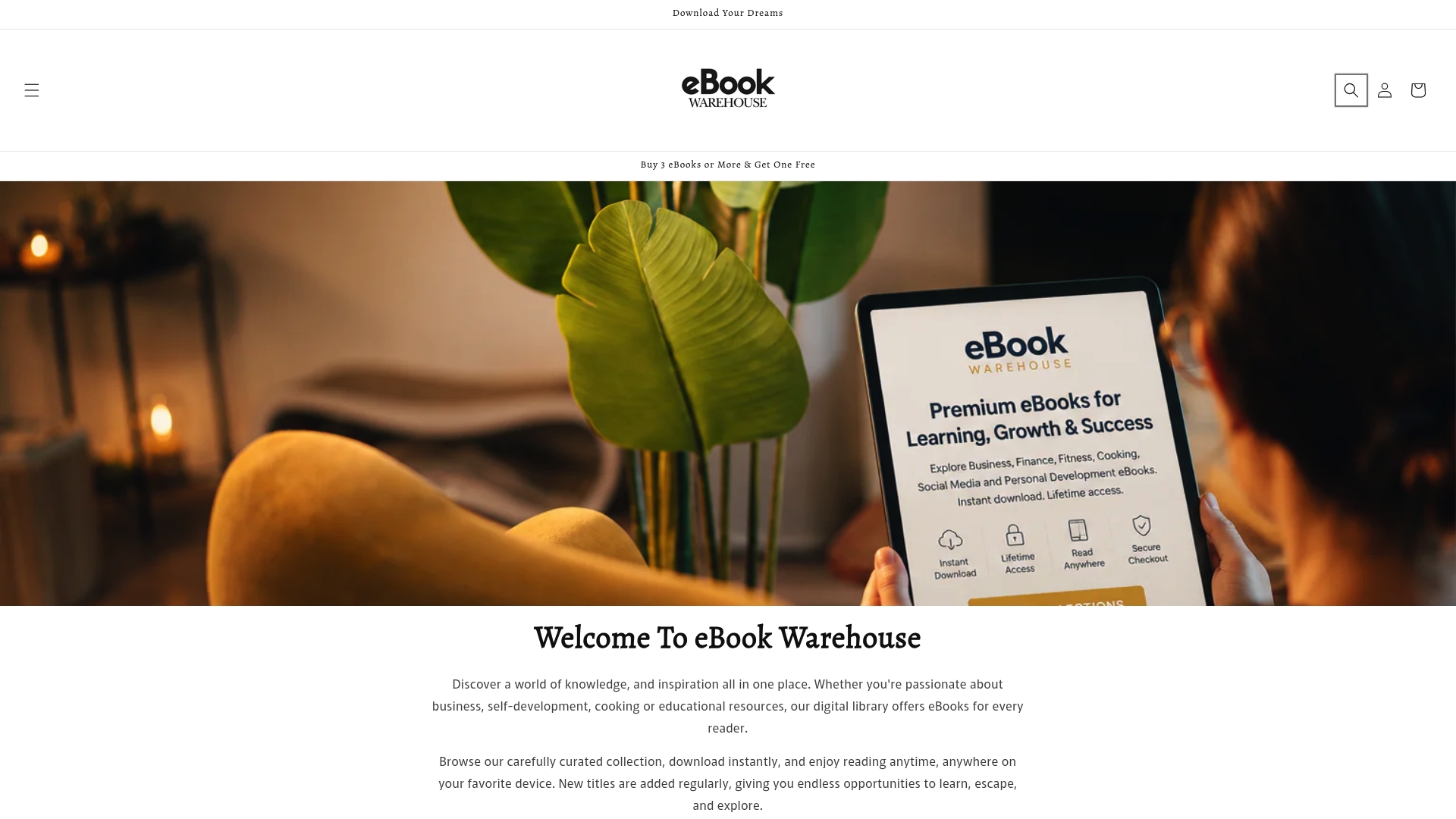
Three picks worth starting with: Savvy Salesmanship: Master the Art of Selling covers core persuasion and closing technique for reps without formal sales training. Developing Emotional Intelligence sharpens the rapport-reading skills that close deals logic alone can’t. Personal Productivity tackles the execution side, getting more calls and follow-ups done in the same working day.
Every title purchased individually, no subscription, no lock-in, and occasional buy-three-get-one-free promotions make stacking a few titles together an easy call. Browse the full Ebook Warehouse catalog and download your first pick in the next five minutes.
High-Value Playbooks And Downloads To Read Next
- Spotio’s B2B prospecting playbook gives you ready-made multi-channel cadences and a five-KPI tracking framework.
- Selling Made Simple offers interview-backed frameworks for repeatable selling results.
- Close’s SaaS sales resources provide starter sequences built specifically for subscription sales cycles.
- The B2B Playbook’s best sales books guide helps you match a title to your role before you spend a dime.
Sources
- B2B Sales Prospecting Guide | SPOTIO
- Selling Made Simple - Version 2.2 (Salesman.com PDF)
- The B2B Playbook — Best sales books
- SaaS Sales for Startup Founders (Close resources)